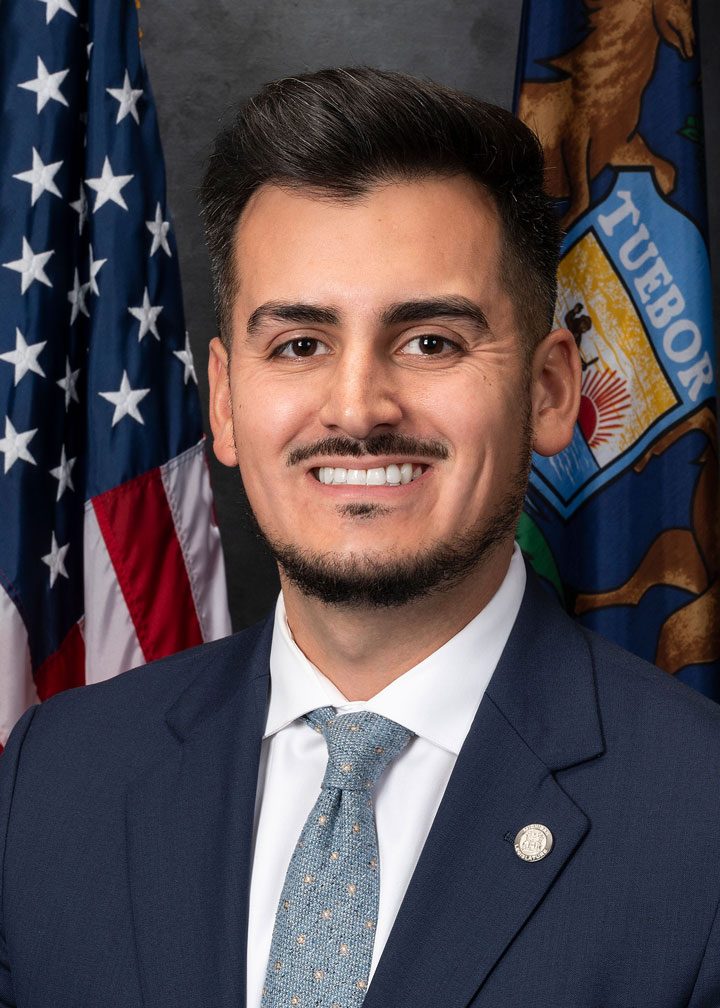
In a post‑midterm session held on Wednesday, Michigan state senators voted to install Trenton Democrat Darrin Camilleri as the new leader of the Senate Democratic caucus. Camilleri steps into the role after longtime leader Winnie Brinks will assume the lieutenant‑governor’s office on Jan. 1.
Democratic majority solidifies control
The leadership change follows the 2026 midterm elections, which delivered a Democratic sweep of both chambers of the Michigan Legislature. Camilleri highlighted the voters’ message, saying, “They are fed up with the kind of politics that has repeatedly ignored the needs of working‑class families. They want leaders who are ready to take the gloves off and actually fight to lower costs and deliver on their promises.”
Republican response
Republicans elected Sen. Roger Hauck of Mount Pleasant as Senate minority leader. Hauck expressed gratitude for his colleagues’ support and pledged to address what he described as the state’s lag in jobs and education, stating, “We are committed to offering a better path forward for Michigan families.”
Implications for Michigan families
With Democrats now holding the majority in both the House and Senate, the party is positioned to advance its agenda on issues that directly affect families, such as cost‑of‑living relief, education funding, and workforce development. The new leadership is expected to work closely with Governor Jocelyn Benson to translate the election mandate into concrete policies.
Local perspective
Camilleri, a former state representative from the Detroit‑area suburb of Trenton, emphasized his commitment to the communities that helped elect him. He noted that the recent election results reflect a broad desire for pragmatic solutions rather than partisan posturing. “Our state has a chance to put families first again,” he said.
Next steps
The Senate Democratic caucus will convene later this week to set its legislative priorities for the 2027 session. Both parties have signaled a willingness to engage in bipartisan dialogue on matters that impact Michigan’s economy and public services, though clear policy differences remain on taxation, energy, and regulatory reform.
As the new leadership takes shape, Michigan residents can expect a renewed focus on policies that aim to lower living costs, improve educational outcomes, and create jobs—issues that resonated strongly with voters across the state in November.
Original reporting: Warren | FOX 2 Detroit — read the source article.