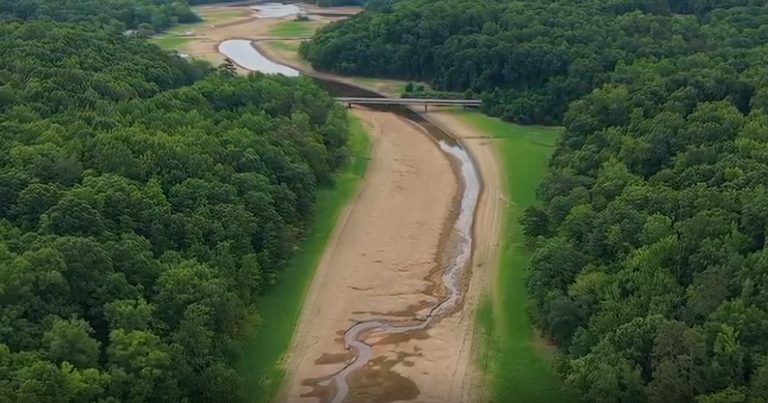
Durham’s water managers announced that the city has an estimated 81 days of water supply remaining as reservoir levels continue to fall. Lake Michie sits 12.71 feet below its full pool elevation of 341 feet, and Little River Reservoir is 19.08 feet below its full level of 355 feet, leaving the combined storage at roughly 31 percent of capacity.
How the city is augmenting its supply
To offset the shortfall, Durham is tapping additional sources beyond its two primary reservoirs. The city draws water from the former Teer Quarry, now a storage facility, and has an allocation from Jordan Lake. Because Durham lacks the treatment infrastructure to process Jordan Lake water directly, it contracts with the Town of Cary to treat and deliver the water through shared pipelines.
Durham also purchases water from the Orange Water and Sewer Authority (OWASA), which serves Chapel Hill and Carrboro. OWASA’s supply comes from Cane Creek Reservoir, University Lake, and Quarry Reservoir – all rain‑filled reservoirs that are treated before distribution. According to Joe Lunne, senior public information and communications analyst for Durham’s Department of Water Management, the city has increased the volume received from both Cary and OWASA as drought conditions persist.
Current Stage 2 restrictions and what they mean for residents
Durham remains under Stage 2 water restrictions. For homeowners, sprinkler and spray irrigation are prohibited, and there are no designated watering days. Hand‑watering of plants, drip irrigation, and the use of watering bags for trees and shrubs are allowed. Decorative fountains, ponds, and pools may only receive recycled water, while swimming and wading pools can be topped off only to replace evaporation or spillage.
Vehicle washing with city water is limited to commercial or institutional car washes. Outdoor cleaning of sidewalks, driveways, decks, or building exteriors may use city water only when necessary for health, safety, or surface preparation for painting.
Restaurants may serve drinking water only upon request, and large water users—those consuming more than 100,000 gallons per day—must aim to cut usage by 30 percent and document their conservation efforts under an approved Water Conservation Plan.
Potential move to Stage 3 restrictions
Stage 3 restrictions would be triggered if forecasts show at least a 10 percent chance that combined reservoir storage could drop to 25 percent within the next eight weeks. Lunne cautioned, “While we are getting close to hitting the trigger for Stage 3, we aren’t there yet.”
Short‑term relief may arrive as rain is forecast for the next few days, which could modestly raise reservoir levels and delay any escalation of restrictions.
What residents can do now
- Conserve water by using handheld hoses or watering cans instead of sprinklers.
- Prioritize essential indoor uses and defer non‑essential outdoor cleaning.
- Stay informed through Durham’s water‑management website for updates on reservoir levels and any changes to restriction tiers.
The city encourages all residents to continue the conservation measures already in place and to support the collaborative efforts with neighboring water providers that help keep Durham’s water system resilient during this prolonged drought.
Original reporting: WRAL Raleigh — read the source article.