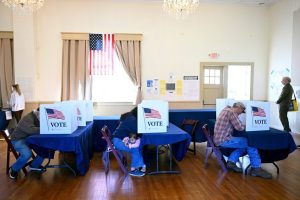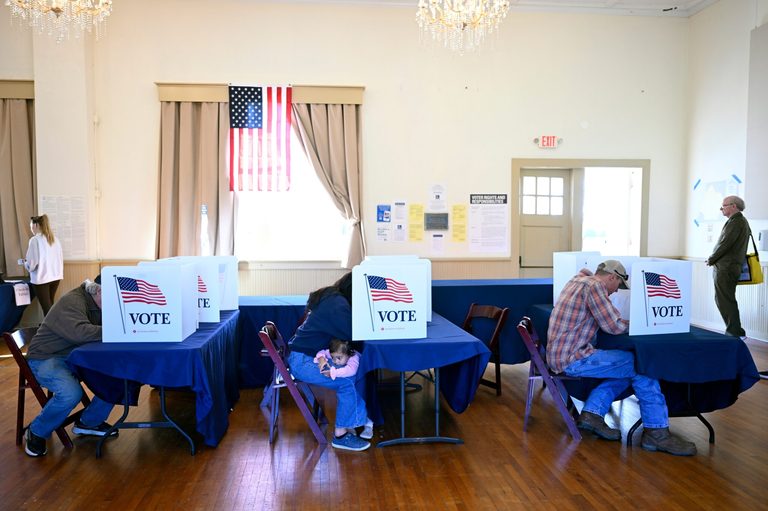
On Election Day, voters in 15 of Virginia’s 47 localities approved a 1% sales tax to help fund school construction and modernization projects. The measure, authorized by the General Assembly in June, allows local governments to raise revenue for school building needs, which the state estimates total $25 billion for over 1,000 aging facilities.
Background and legislative action
The authority for localities to levy a sales tax on school projects was introduced last January by House Education Committee Chair Sam Rasoul, D‑Roanoke, and State Senator Jeremy McPike, D‑Prince William. Both lawmakers added the proposal to the state budget, and the General Assembly approved it in June, pending voter approval in each locality.
Virginia operates under Dillon’s Rule, meaning local governments can only exercise powers granted by the state legislature. While localities can adjust property tax rates on their own, any change to sales taxes requires state approval.
Election results and local impact
The referendum results show a clear split: roughly 30% of localities voted “yes,” while about 70% voted “no.” The 15 approving localities will now be able to collect the additional sales tax, providing a new revenue stream for school construction and modernization. The remaining 32 localities will need to explore alternative funding options.
Rasoul emphasized that the sales‑tax measure is not a long‑term fix for the Commonwealth’s school‑building crisis. “This isn’t going to be able to build all the schools that need to be built,” he said. “So there’s a lot more that needs to be done … even at the state level to help struggling school divisions.”
McPike echoed that sentiment, noting that the Commission on School Construction and Modernization will analyze the referendum outcomes and consider long‑term funding structures. The commission, along with other state lawmakers, will reconvene in Richmond on Jan. 13, 2027, to discuss future legislation and budget amendments.
Local examples and concerns
Mecklenburg County, one of the nine original localities granted authority, chose not to place the measure on its ballot, citing concerns about raising taxes. County records show an estimated $6 million per year in debt service would be required to move forward with new school construction, a cost that dampened enthusiasm for the tax increase.
Other localities, such as Halifax County, were early adopters of the authority back in 2019. Since then, the list of jurisdictions with the option to hold a referendum has grown from the original nine to 24.
Looking ahead
State officials acknowledge that while the sales‑tax option provides a useful tool, additional state‑level support will be essential to address the massive backlog of school‑building needs. The upcoming discussions in early 2027 will focus on evaluating the referendum results, refining funding mechanisms, and ensuring that Virginia’s children have safe, modern learning environments.
For voters and local leaders, the referendum results underscore the importance of community involvement in decisions that affect education infrastructure and local tax policy.
Original reporting: Alexandria, VA News – WTOP News — read the source article.