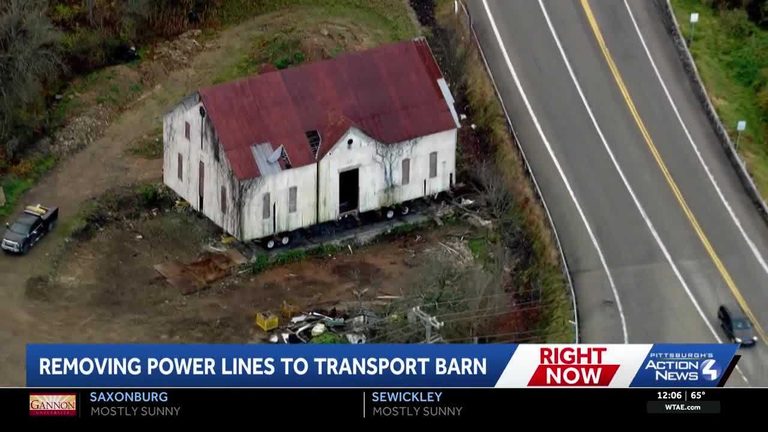
Washington County – A piece of local history was saved this week when a 70‑foot historic barn, known as Uncle Charlie’s barn, was carefully lifted off its foundation and driven half a mile down Route 519 to its new home on Ross Farm. The move comes after a February fire destroyed the farm’s original barn and claimed the lives of 147 sheep.
Preserving a family legacy
Ross Farm was built in 1910 by Amy Manko’s great‑grandfather. The newly‑relocated barn originally belonged to her great‑grandfather’s brother, Charlie, and is the last remaining structure from his historic farm, which has since been converted to commercial use. “I want everybody to see this. This is cool. It’s the biggest thing to happen in Glyde in a hundred years,” Manko said, expressing the community pride she feels about the preservation effort.
From tragedy to triumph
The February fire was a total loss for the Manko family. The blaze consumed the original barn while the flock of 147 sheep were locked inside to protect them from coyote pressure during a cold spell. “Our sheep were 12 days away from lambing. The barn burnt with my entire flock in it,” Manko recalled.
Shortly after the fire, the neighboring Ritter family offered to donate Uncle Charlie’s barn to the Washington County Historical Society. Clay Kilgore, the society’s executive director, said the donation provided a timely opportunity to preserve local heritage while helping Ross Farm rebuild.
Engineering the move
Moving a structure of this size required specialized equipment. Crews lifted the barn off its original footings and placed it on remote‑controlled platforms, using a joystick to steer the 70‑foot‑wide building down the road. Power lines were temporarily taken down to clear a safe path.
“It’s very exciting that we’re going to get to bring Uncle Charlie’s barn over here,” Manko said. She expects the barn to be fully restored and ready for use within four to six weeks.
Community impact
The relocation not only restores a historic landmark but also gives Ross Farm a functional space to house a new flock of sheep. After five attempts to move the structure, the successful transfer marks a new chapter for the farm and a tangible reminder of Washington County’s agricultural roots.
Local residents and heritage advocates have praised the effort. “We’re really, really grateful that they decided to preserve it rather than demolish it or sell it off in pieces,” Manko added, highlighting the community’s commitment to safeguarding its past.
Looking ahead
With the barn now on site, Ross Farm plans to use the space for livestock shelter and educational events that showcase the county’s farming history. The project underscores how cooperation between private owners, neighboring families, and the historical society can turn a tragic loss into a lasting community asset.
Original reporting: WTAE (Hearst) – local — read the source article.