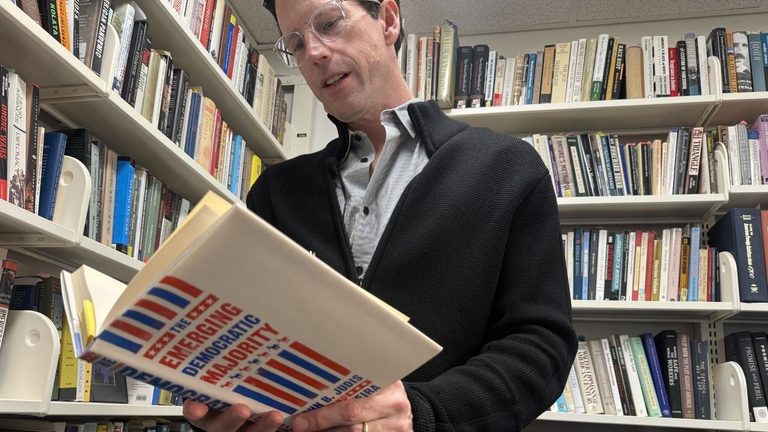
Columbus, Ohio – Ohio State University political historian Chris Nichols, the Hayes Chair in National Security Studies, told local media that the 2026 midterm outcomes could signal a historic realignment in the Buckeye State. Democrats captured a number of previously Republican‑held seats, including the 15th Congressional District, and secured key statewide offices such as the secretary of state.
Economic concerns drive voter decisions
Nichols emphasized that the rising cost of living and broader economic anxiety were central to the Democratic victories. He said voters appear to hold the Republican Party responsible for short‑term economic mismanagement, noting that “the economy really, really matters” to Ohioans.
According to Nichols, Democratic candidates succeeded by keeping their messages focused on affordability, morality, and respectability in government, rather than becoming entangled in cultural debates. “They stayed on a message about affordability. They stayed on a message on morality and respectability in government and what they were actually going to try to change,” he explained.
Cross‑party voting and candidate quality
Voters in the 15th Congressional District elected Democrat Don Leonard over incumbent Republican Mike Carey, reflecting a willingness to cross party lines for change. Local voters such as Toni Martin expressed frustration with the cost of living and broken promises, while Bob McClintock said, “Maybe we need a change.”
Nichols added that strong, relatable candidates also made a difference, with some Democrats connecting better with constituents than their Republican opponents.
Redistricting map and its unexpected impact
Republicans redrew Ohio’s congressional map last year to create a partisan advantage, yet Democrats still managed to flip several seats. Nichols suggested that the party may have over‑estimated continued support from the same voter base that helped President Trump win the state in 2024. “There is no doubt that the redrawing of maps in the state of Ohio, the state of Texas, and a number of other states across the country came back to bite the parties in power, in particular Republicans,” he said.
He pointed to shifting preferences among Latino voters, Black voters, and younger men as evidence of changing political dynamics.
Negative advertising may have backfired
Nichols also warned that late‑stage negative campaign ads can depress voter turnout. He cited research indicating that personal attacks “tend to depress voters” and referenced Republican Vivek Ramaswamy’s ads targeting Democrat Amy Acton. Acton’s openness about the personal history used in the ads, Nichols argued, may have mitigated the attacks, while Ramaswamy’s own campaign struggled to connect with voters.
Potential long‑term implications
If Democrats ultimately hold seven or eight of Ohio’s fifteen congressional seats, the balance of power in the state could shift dramatically. Nichols noted that Democratic control of statewide offices, including the secretary of state, could influence election security and other administrative decisions.
“The state house is where it’s at really in American politics, and this change could be seismic in Ohio politics,” he said.
He also highlighted a broader trend of younger, more diverse candidates winning races across the country, suggesting that the Ohio results may be part of a national movement toward new leadership profiles.
Looking ahead
While Nichols cautioned that it will take time to determine whether this election marks a lasting transformation, he stressed that the outcomes demonstrate that even traditionally Republican‑leaning states can experience significant political shifts when voters prioritize economic concerns and respectful governance.
Original reporting: WCHS Eyewitness News Charleston (local) — read the source article.