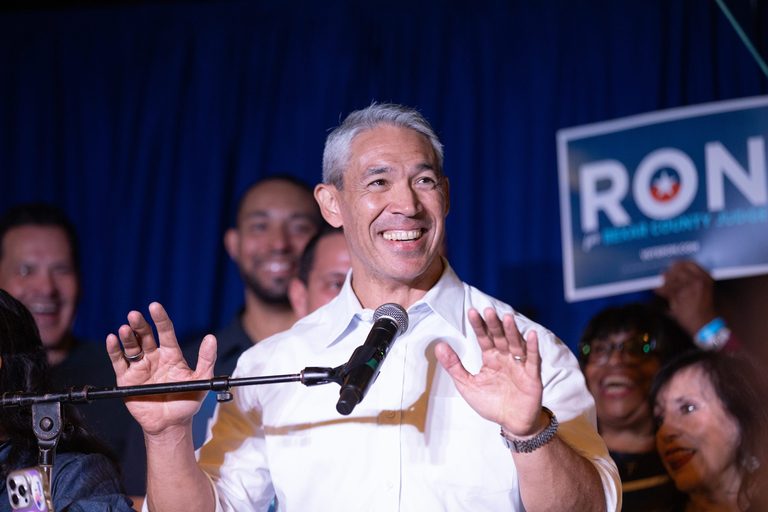
Ron Nirenberg, who served twelve years as San Antonio’s mayor, took office Tuesday night as the new Bexar County Judge after a decisive victory over Republican challenger Patrick Von Dohlen. Celebrating with supporters at Backyard on Broadway, Nirenberg emphasized that his “heart is still in the 210” and that his first actions will center on public safety, mental‑health resources, and strategic infrastructure planning.
Election results and the blue wave
Nirenberg secured nearly twice as many votes as Von Dohlen, winning by a 33‑point margin in a heavily Democratic county. The result reflects a broader shift in Texas politics, with Democrats making historic gains in state‑wide races and in Bexar County’s own 2026 midterm elections.
Transition from city to county government
Unlike the city of San Antonio, which operates under a council‑manager system with ten elected council members, Bexar County’s government is a five‑member Commissioners Court. The judge works alongside a county clerk, sheriff, district attorney, and a slate of appointed judges. County officials, including the sheriff and district attorney, will be key partners as Nirenberg implements his agenda.
Former Bexar County Judge Nelson Wolff, who first held the post in 2001, praised Nirenberg’s communication skills and said the county will benefit from a “spokesman who was articulate and could lead.” Wolff, who endorsed Nirenberg after initially supporting his 2022 successor, highlighted the importance of coalition‑building across city, county, and state levels.
Key priorities
- Public safety: Nirenberg plans to address jail overcrowding, support a diversion pilot for individuals with mental‑health or behavioral issues, and eventually establish a permanent diversion center.
- Mental‑health services: He wants to create a criminal‑justice coordinating committee that brings together law‑enforcement, health agencies, and community groups to ensure lasting solutions.
- Infrastructure and budgeting: With Bexar County’s budget at roughly $2.6 billion—significantly smaller than San Antonio’s $4.4 billion—Nirenberg aims to develop 5‑ and 10‑year financial plans, eliminate duplicated work between city and county, and improve efficiency before considering any tax increases.
He warned that any revenue adjustments must be discussed openly with residents and should never fall on “the backs of working families.” The county’s 2026 budget already shows a $200 million reduction from the prior year and a $68 million surplus, underscoring the need for fiscal prudence.
Collaboration with state officials
Bexar County operates under powers granted by the Texas Constitution and state law, meaning many decisions require approval from the state legislature. With Democrat Gina Hinojosa now governor and a more Democratic‑leaning House expected in the 2027 session, Nirenberg anticipates new tools that could expand county authority.
Travis County Judge Andy Brown noted that counties often face challenges because they can only act on powers specifically granted by the state. He suggested that upcoming legislative sessions could provide additional flexibility for local problem‑solving.
Looking ahead
Nirenberg’s inaugural remarks emphasized relationship‑building: “You have to build coalitions, show the will and trust of the public, and ensure accountability through those relationships.” He will work closely with newly elected Commissioners Tommy Calvert (Precinct 4) and Justin Rodriguez (Precinct 2), both of whom expressed enthusiasm for a collaborative court.
As the first former San Antonio mayor to assume the county’s top executive role, Nirenberg’s experience navigating the COVID‑19 pandemic and passing a $150 million affordable‑housing bond will inform his approach to county‑wide challenges. Residents can expect regular updates as the new administration rolls out its public‑safety coordinating committee and begins long‑range planning for roads, water, and other critical infrastructure.
Original reporting: San Antonio Report — read the source article.