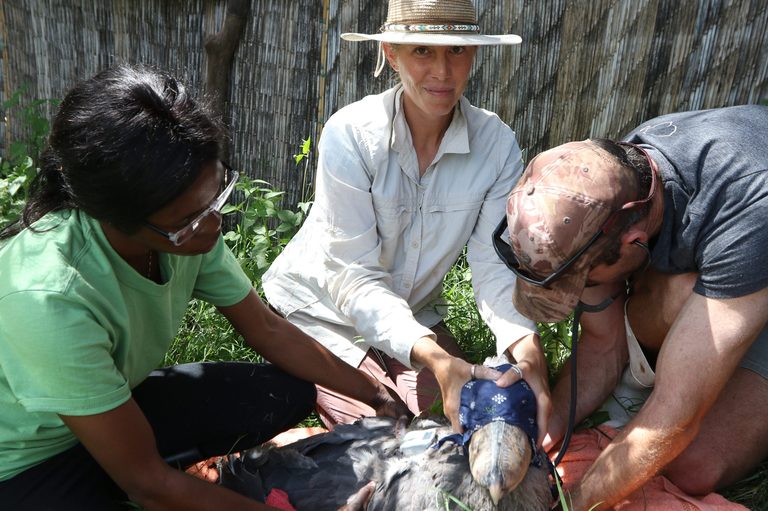
Indiana native Maggie Hirschauer is traveling to the Bangwelu Wetlands of Zambia to study and protect the endangered shoebill, a prehistoric‑looking bird that stands about five feet tall with an eight‑foot wingspan. While scientists know the bird’s size and diet, many details of its wild life remain a mystery.
Local roots, global impact
Hirschauer grew up in Carmel and attended St. Luke Catholic School, Brebeuf Jesuit Preparatory, and Indiana University, where she crafted an animal‑behavior major. After field work with chimpanzees in Uganda and studies of blue monkeys, vultures, mountain lions and butterflies, she joined African Parks in 2022 as the shoebill program manager.
Conservation work in Zambia
In the Bangwelu Wetlands—an area that supports roughly 8,000 shoebills worldwide—Hirschauer leads a team that monitors nests, protects habitats, and engages the roughly 60,000 local residents who live within the game‑management zone. The program offers participants $120 a month for nest monitoring and a $250 bonus when a chick becomes independent, providing both financial incentive and education.
Researchers also work with local fishermen, who know shoebill behavior better than anyone, to build a community that sees the bird as a flagship species for broader wetland protection.
Recognition and future hopes
Her work has placed her among 19 international finalists for the 2027 Indianapolis Zoo Emerging Conservationist Award, which includes a $50,000 prize. Hirschauer says the award’s recognition will help secure additional funding to expand the shoebill program.
“The recognition is great, but it means there’s more support to get the work funded and to get the work done, so it’s really exciting,” she said.
Why the shoebill matters
Shoebills are apex predators that hunt large fish, frogs, lizards and even baby crocodiles. Protecting their habitat also safeguards the wetlands that support countless other species and provide vital ecosystem services to local communities.
Hirschauer’s dedication exemplifies how Indiana’s next generation of scientists can make a global difference while honoring their home‑state values of stewardship, family, and faith.
Original reporting: Mirror Indy — read the source article.