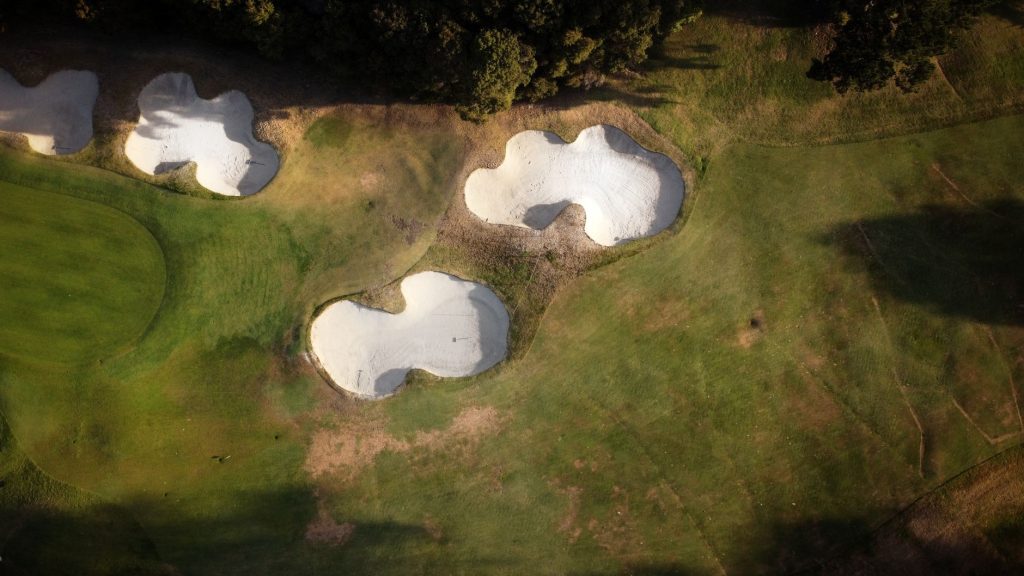
Litchfield Country Club’s golf course — the original one, not the resort configuration down the road — opened in 1966, making it one of the oldest continuously operating layouts in this stretch of the South Carolina coast. That fact alone sets the tone: this is not a course trying to impress you with waterfalls or island greens. It is a mature, shaded, quietly demanding track that rewards patience over spectacle.
I played it on a Tuesday morning last October, the kind of day where the air still smells like pluff mud from overnight low tide and the light through the pines goes gold before nine o’clock. The starter, a compact man named Roy who seemed genuinely unbothered by my mediocre handicap, handed me a hand-drawn yardage card and said the front nine plays trickier than it looks. He was right.
The course runs through a residential community off Willbrook Boulevard, which means you have moss-draped live oaks framing almost every fairway and the occasional heron standing in a lateral hazard like it owns the place. The turf is Bermuda, kept in decent shape without the manicured sterility you get at resort tracks charging twice the price. Greens are firm and faster than you expect, particularly the par-three sixth, where the break runs away from the pond and absolutely nobody believes that until they three-putt it.
Green fees for public play generally run in the $45–$65 range depending on day and season, cart included. That is a legitimate bargain for a layout this old and this playable. Twilight rates drop further, and if you can get out around four in the afternoon in spring, the shadows get long and the course empties out in a way that makes the whole thing feel almost private.
The clubhouse is modest — a small pro shop, some sandwiches behind a counter, a rack of Litchfield-branded shirts that have not changed much since the Clinton administration. I bought a sleeve of balls and a Diet Coke and nobody tried to upsell me anything. That alone felt like a small mercy.
What keeps me coming back, honestly, is the character of the layout itself. Holes seven through ten run along the back edge of the property where the tree canopy closes in and the fairways narrow. There’s a dogleg left on eight that requires either a blind draw off the tee or a punched layup, and the choice you make there tells you something about yourself as a golfer. The greens hold approach shots reasonably well, but they punish anything landing short with awkward chip angles that the scorecard won’t warn you about.
This is a course for people who actually like golf — not the Instagram version of it, but the version where you spend two hours thinking about one particular shot you should have hit differently. Bring your own food if you want lunch. Tee times can be booked by phone or walk-in, and outside of holiday weekends, you usually don’t have to plan too far ahead. If you’re staying anywhere along the Pawleys Island corridor and want a morning that doesn’t involve a beach chair, Litchfield Country Club is worth working into the schedule.