Fresno State’s on-campus farmers market has been running since 1946 — not as a weekend pop-up, but as a year-round retail operation tied directly to the university’s agricultural college. That’s not marketing copy; it’s just a fact that most Fresnans who shop there have never bothered to look up. The market operates out of a no-frills storefront on the east edge of campus, off Shaw Avenue near Chestnut, and it sells produce grown by students in the university’s farm programs. Some of what’s on the shelves last week was in the ground four days ago.
The selection changes constantly, which is either the best or the most annoying thing about it depending on what you drove over for. Stone fruit in summer, citrus in winter, tomatoes that actually smell like something in August. There are also eggs from the campus poultry unit, dried goods, honey, and jams — all produced on university land. Prices are generally lower than what you’d pay at specialty grocers in town, and considerably lower than the premium farmers markets that set up in parking lots on weekend mornings. A pound of almonds runs a few dollars. Peaches in season might be a dollar fifty a pound, sometimes less when there’s a surplus.
The student connection is real, not decorative. The people staffing the counter are often ag students doing supervised work. They’re not always chatty, but if you ask where something came from or how it was grown, they usually know. That’s a different experience than buying produce from a reseller who drove up from the southern valley.
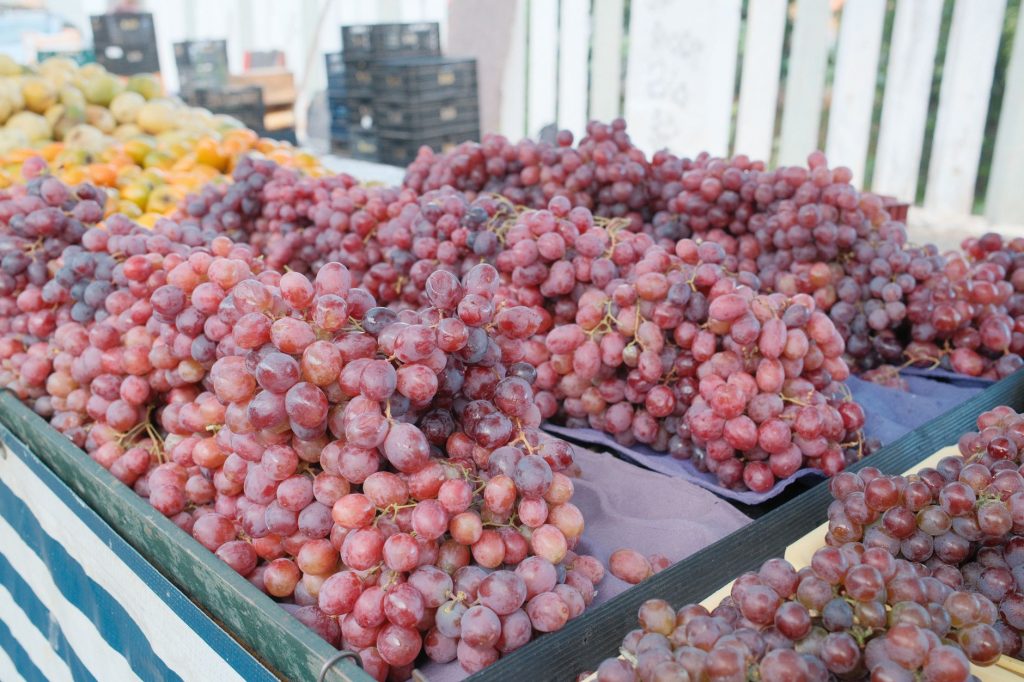
It’s worth going in fall, when the raisin grapes are drying and the fig selection peaks. The campus vineyard produces table grapes and wine grapes both, and around harvest the market sometimes has varieties you won’t see anywhere else — muscat varieties, sultanas — things that were standard in the San Joaquin a generation ago and have mostly disappeared from commercial shelves. The wine program also bottles under the Fresno State label, and you can pick up bottles at the market. They’re approachable wines made in an educational setting, not trying to compete with boutique producers. At twelve to fifteen dollars a bottle, they’re honest about what they are.
Parking on campus requires a day pass on weekdays, available from dispensers near the main entrances — currently a couple of dollars, worth factoring in. The market itself is cash and card, open Monday through Friday during the academic year, with reduced hours in summer. Hours are posted on the College of Agricultural Sciences website, and they do shift around semester breaks, so checking before you make a trip is just practical.
What makes it stand out isn’t ambiance. The building is utilitarian. There’s no live music or food trucks in the lot. It’s a working retail outlet attached to a working farm, and that straightforwardness is exactly what makes it worth visiting. You’re buying food grown a few hundred yards from where you’re standing, sold by people who grew it, at prices that reflect the absence of middlemen. In a city that produces a significant portion of the country’s food supply, that’s a more honest version of local than most of us ever actually manage to access.