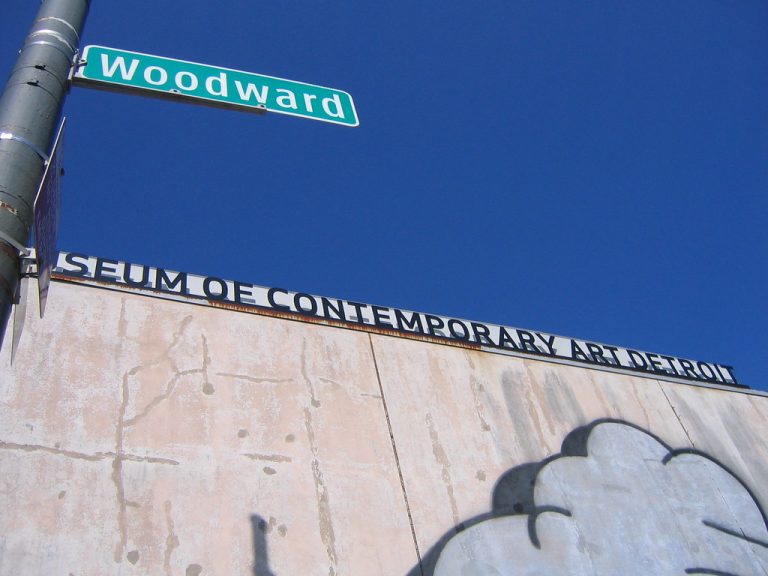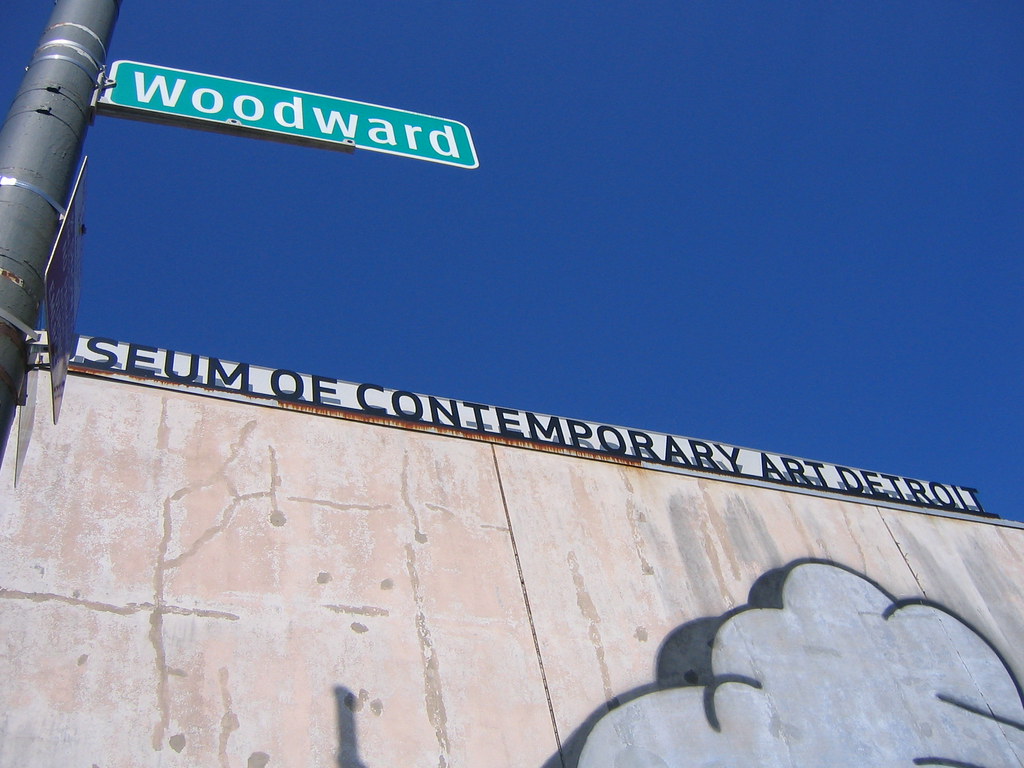
The Museum of Contemporary Art Detroit opened in 2006 inside a former auto dealership on Woodward Avenue — a building that had been sitting empty for years, its concrete floors cracked and its bones thoroughly industrial. The founders made a deliberate choice not to fully renovate it. The raw ceilings, the scarred floors, the sense that the building remembers something — all of that stayed. It still feels less like a traditional museum and more like a place where contemporary art gets worked out in real time.
That instinct turns out to be one of the better reasons to show up. MOCAD doesn’t collect — it doesn’t hold a permanent collection in the conventional sense — which means the galleries are always cycling through new exhibitions. Some are ambitious international loans; others spotlight Detroit and Michigan artists who deserve a larger room than they usually get. The scale of the space rewards ambitious installation work especially well. Artists who need forty feet of uninterrupted wall tend to do interesting things when they get it.
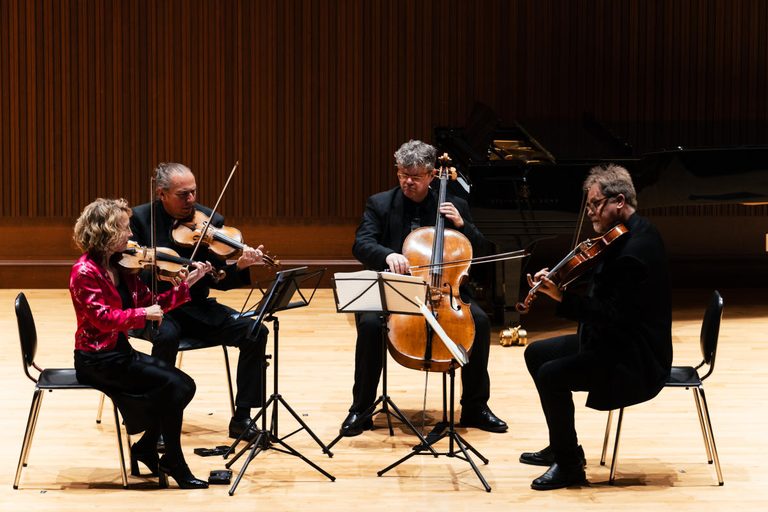
The programming extends well past the visual. MOCAD runs a consistent schedule of film screenings, artist talks, performances, and concerts in the main gallery space. Depending on the week, the same room that holds a quietly confrontational painting show on a Tuesday afternoon might be cleared for a live electronic set on Friday night. The building transitions between those modes without feeling schizophrenic — the aesthetic is consistent enough that the shifts feel natural.
Admission is kept intentionally accessible. General admission runs around five dollars, and there are free days rotated throughout the year, including a standing free admission on the first Friday of most months. That price point has a real effect on who comes: student groups, working artists, people who wander in off Woodward without having planned it. The crowd on a free Friday is more varied than most Detroit cultural institutions manage.
The bookshop near the entrance is small but well-edited — the kind of art bookstore that keeps monographs on hand that a typical chain wouldn’t bother stocking, alongside publications by the artists whose work is currently on the walls. It’s worth fifteen minutes of browsing even if the exhibition itself doesn’t connect.
Midtown is the obvious descriptor for the neighborhood, and the DIA and Wayne State are close enough that the blocks around Woodward feel genuinely walkable on a good afternoon. MOCAD sits close to the northern edge of that cluster, which means parking is usually easier than the core of Cass Corridor, and foot traffic on Woodward stays lively enough that the stretch feels active without being crowded. Detroit’s better contemporary galleries — Playground Detroit, Library Street Collective — aren’t far if the goal is a full afternoon.
What MOCAD does that the city’s other cultural anchors can’t quite replicate is hold a kind of productive uncertainty. Visiting the DIA means encountering things that have already been decided — masterworks, permanent placement, settled significance. MOCAD is reliably in the middle of figuring something out. For a city that spent the better part of two decades figuring itself out, that posture fits.