A four‑judge panel of the Appellate Division, Second Department, issued a unanimous decision Wednesday overturning Nassau County’s law that prohibited transgender girls and women from participating on women’s sports teams at county facilities. The judges held that the county ordinance conflicted with New York’s statewide Human Rights Law and Civil Rights Law, which protect individuals from discrimination based on gender identity or expression.
Legal background and decision
The appellate court found the county’s permit restrictions were pre‑empted by state law and ordered the lower court to enter a judgment declaring the measure invalid under the state Constitution and the Municipal Home Rule Law. The ruling directs that any county‑run athletic facility must treat transgender athletes the same as all other participants.
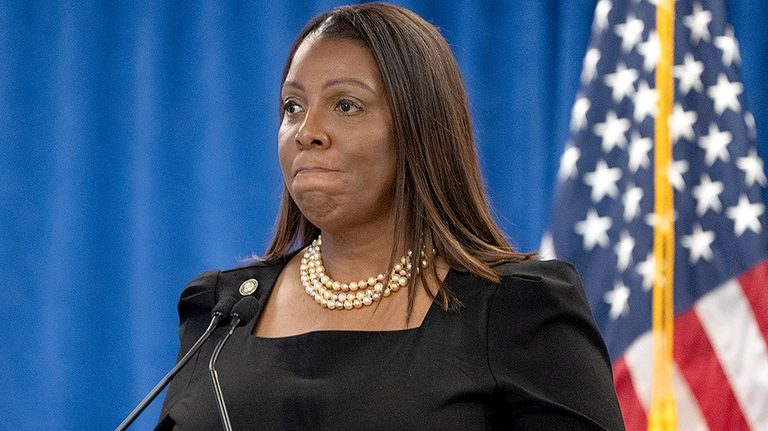
Attorney General Letitia James praised the decision, stating, “Nobody should have to fight to play the game they love. Transgender athletes have the right to play on the court, field, or roller rink like everyone else, and today the Second Department made clear that Nassau County cannot ban them.” County Attorney Thomas Adams said Nassau will continue to review the decision and pursue further appeals.
How the law was enacted
County Executive Bruce Blakeman first imposed the policy through a February 2024 executive order. After a judge blocked that order for lack of authority, the county legislature passed a law in July 2024 that required organizations seeking permits for sporting events at county facilities to designate themselves as male, female, or co‑ed based on biological sex at birth. The law barred permits for female events that included male competitors, while allowing female athletes to compete in male and co‑ed categories.
Although the measure did not prohibit transgender athletes from all sports participation, it prevented teams designated for women or girls from obtaining county permits if they included transgender female competitors. The rule affected more than 100 county facilities, including fields, courts, pools and ice rinks.
Judicial appointments and political context
All four judges who joined the ruling were appointed by Democratic governors: Justice Betsy Barros (appointed by former Gov. Andrew Cuomo in 2014), Justice Deborah Dowling (appointed by Cuomo in 2021), Justice Barry Warhit (appointed by Gov. Kathy Hochul in 2022), and Justice Lisa Ottley (selected by Hochul earlier this year). Their election histories list them as Democratic candidates, underscoring the partisan backdrop of the decision.
The case unfolded amid a broader national debate over transgender participation in female sports. In June, the U.S. Supreme Court upheld similar restrictions in West Virginia and Idaho, allowing schools to determine eligibility for female teams by biological sex under Title IX and the Equal Protection Clause. However, the Court’s ruling did not mandate every state to adopt such policies, and the Nassau case hinged on whether a county could impose a permit policy that conflicted with state anti‑discrimination law.
Impact on local athletes and organizations
The New York Civil Liberties Union, representing the Long Island Roller Rebels—a women’s roller‑derby league that welcomes transgender participants—argued that the county’s policy limited practice opportunities and threatened the league’s ability to find opponents. The appellate decision restores the league’s right to compete without the county’s discriminatory permit restrictions.
Attorney General James reiterated her commitment to protecting New Yorkers from exclusionary policies, saying, “As long as I am attorney general, no New Yorker will be shut out of public life because of who they are.”
Original reporting: Fox News (HLL/CB) — read the source article.