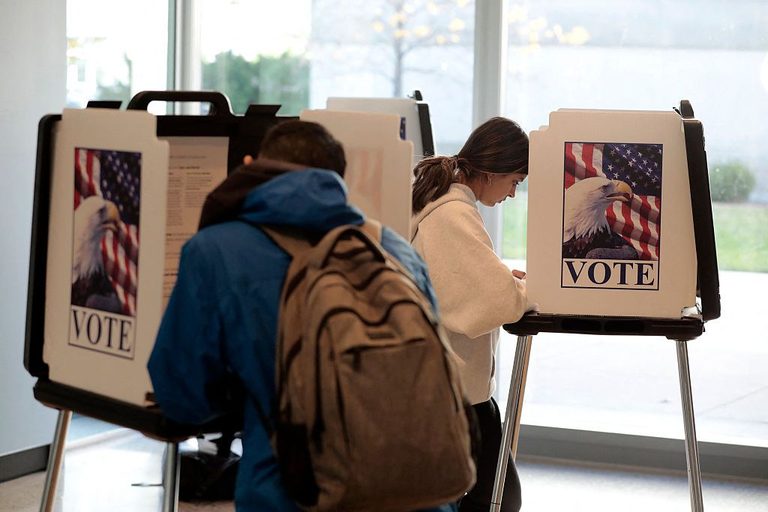
Indiana voters delivered a mixed verdict in the November midterm elections, reshaping the state’s political landscape and signaling new challenges for the Republican Party. The results, discussed by political analysts Baker & Cruz with Dr. Laura Wilson, associate professor of political science at the University of Indianapolis, highlight both Democratic gains and voter appetite for tougher bail policies.
Key Race Outcomes
Democrat Beau Bayh emerged victorious in the statewide race for secretary of state, defeating his Republican opponent by a margin that exceeded pre‑election polls. Bayh’s win adds a Democratic voice to an office traditionally focused on election administration and business services.
In a surprising turn, J.D. Ford, a Democrat, captured Indiana’s 5th Congressional District, unseating the incumbent Republican candidate. Ford’s upset reflects shifting voter sentiment in a district that had been considered a Republican stronghold for years.
At the county level, Ryan Mears was re‑elected as Marion County prosecutor with a landslide, reaffirming his tough‑on‑crime stance and broad support among local voters.
Constitutional Amendment on Bail
Indiana voters also approved a constitutional amendment that expands judges’ authority to deny bail in certain cases. The measure, which appeared on the ballot as a public safety initiative, passed with a clear majority, indicating strong community backing for stricter pre‑trial controls.
Republican Outlook for 2028
Looking ahead, Dr. Wilson warned that Indiana Republicans face a critical crossroads. She emphasized the need for the party to reconnect with everyday voters, particularly on issues of affordability and economic security. “If the GOP does not address the cost‑of‑living concerns that dominate households across the Hoosier State, it risks further erosion of its base,” Wilson said.
She also noted that the recent Democratic victories could energize the party’s grassroots, while the bail amendment may provide Republicans with a policy win to leverage in future campaigns.
What This Means for Hoosiers
For Indiana residents, the election outcomes translate into immediate changes in how elections will be administered, how federal representation will be voiced, and how the criminal‑justice system will handle bail decisions. The new secretary of state will oversee upcoming election cycles, potentially influencing voter‑access initiatives. Meanwhile, the 5th District’s new congressional representative will bring a different perspective to the U.S. House, likely affecting federal funding and policy priorities for the region.
Local officials and community leaders are already planning town‑hall meetings to discuss the implications of the bail amendment and to gauge public reaction. As the state moves toward the 2028 election cycle, both parties are expected to intensify outreach efforts, with a particular focus on addressing the affordability concerns highlighted by Dr. Wilson.
Indiana’s midterm results underscore a dynamic political environment where voter preferences are evolving, and where both parties must adapt to maintain relevance in the state’s future elections.
Original reporting: 93.1 WIBC (Indianapolis) — read the source article.