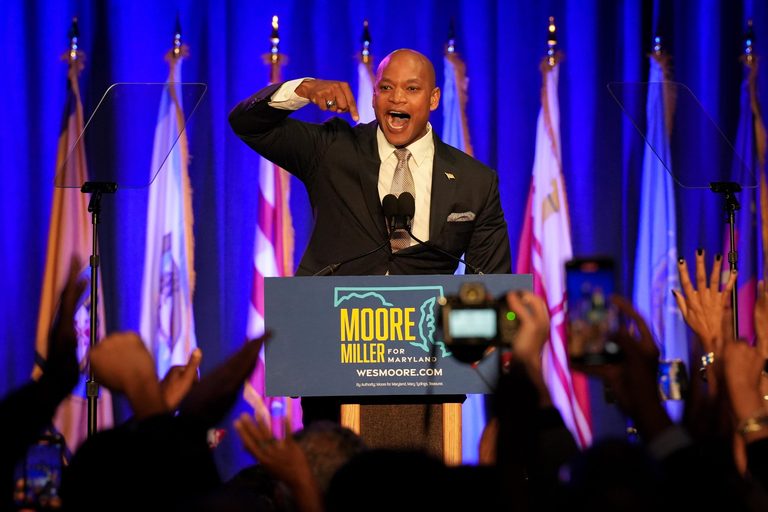
Maryland’s November election delivered a solid win for the state’s Democratic Party. Incumbent Governor Wes Moore was reelected with a comfortable margin, and the constitutional redistricting amendment he championed passed with 60% support, surpassing many analysts’ expectations.
Statewide results and legislative gains
In the House of Delegates, Democrats added at least two seats, further enlarging their supermajority. The seven largest jurisdictions in the state will remain under Democratic leadership, and five of those—Baltimore City, Baltimore County, Montgomery County, Prince George’s County, and Howard County—will be administered by African American executives.
On the Eastern Shore, a Democrat won the county executive race in Wicomico County. In Howard County, for the first time since 1987, all five council seats are now held by Democrats, cementing the party’s local dominance.
County-level shifts
Frederick County saw the defeat of MAGA‑aligned Sheriff Chuck Jenkins, while Democratic County Executive Jessica Fitzwater was reelected by a ten‑point margin despite criticism over data‑center policies. The county council now holds six Democratic members, up from five.
In Wicomico County, Democrat Ernie Davis secured the county executive seat and helped the Democratic bloc gain a 4‑3 majority on the council, flipping the previous 5‑2 Republican advantage.
Historic milestones
Julian Jones was elected as the first Black county executive in a county where demographic shifts are expected to give White voters a minority status after the next census. The council will expand from seven to nine members, though only one woman will serve, leaving a narrow 5‑4 Democratic majority.
Maryland now joins a growing list of states with multiple Black governors, joining peers in Georgia, Florida, Nevada, and Wisconsin, a development highlighted by former Maryland House speaker chief of staff Alex Hughes.
Implications for the future
Governor Moore, whose national profile has risen, has been traveling to support candidates of color and is rumored to be considering a future presidential bid. Meanwhile, the state faces budget revenue challenges heading into 2027, with tax policy likely to be a central debate.
Republican Congressman Andy Harris retained his seat in the 1st District, winning by ten points and remaining the sole Republican among Maryland’s eight‑member House delegation.
The approved redistricting question, Question 3, reflects a response to former President Trump’s push for mid‑cycle map changes. While several Republican‑led states saw mixed results from such efforts, Maryland’s voters chose to keep the process under Democratic control.
Looking ahead
With Governor Moore term‑limited, speculation abounds about potential candidates for the 2026 gubernatorial race, including Comptroller Brooke Lierman, Lt. Gov. Aruna Miller, U.S. Rep. John “Johnny O” Olszewski Jr., and former Salisbury mayor Jake Day. Additionally, discussions are underway regarding the possible retirement of long‑time Rep. Kweisi Mfume and the interest of Baltimore Mayor Brandon Scott in that congressional seat.
The wave of Democratic victories in Maryland underscores a broader national trend of energized party bases, even as the state’s political landscape continues to evolve.
Original reporting: Baltimore Fishbowl — read the source article.