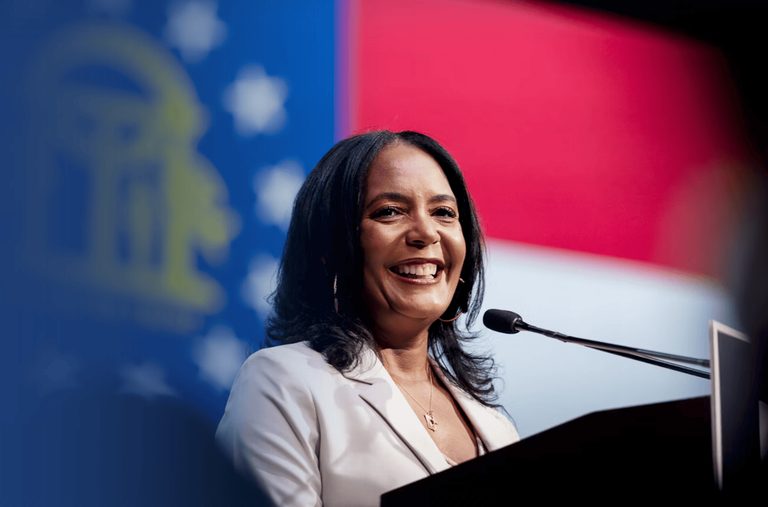
Atlanta native and former mayor Keisha Lance Bottoms has been elected governor of Georgia, ending nearly a quarter‑century of Republican control. Her victory is being framed not as a partisan upset but as a continuation of the state’s long‑standing tradition of pragmatic, moderate governance that blends civic cooperation with economic ambition.
Historical roots of Georgia’s moderate approach
The article points to a mid‑20th‑century alliance among figures such as Governor Carl Sanders, Atlanta Mayor Ivan Allen Jr., Coca‑Cola magnate Robert Woodruff and banker Mills B. Lane. Those leaders built a model in which social progress was seen as a prerequisite for economic prosperity, guided by Georgia’s constitutional motto of Wisdom, Justice and Moderation.
This legacy produced national icons—including civil‑rights leader Dr. Martin Luther King Jr., former President Jimmy Carter, Ambassador Andrew Young, media pioneer Ted Turner and Senator Sam Nunn—and helped attract world‑renowned corporations, sports personalities, nonprofits and cultural institutions to the state.
Demographic change and the new political landscape
Within the 13 core counties of the Atlanta Regional Commission, the demographic shift is striking. Only Cherokee and Forsyth counties remain non‑majority African‑American, and women are increasingly taking leadership roles in local government. The article argues that this evolution does not herald gridlock; rather, it offers an opportunity for inclusive, stable governance.
Governor‑elect Bottoms’ bipartisan strategy
Bottoms, who served two terms as Atlanta’s mayor, has a record of building coalitions with a Republican‑led state government to advance city priorities. She says her first priorities will focus on housing, hunger, education and health care—basic needs that affect every Georgian family. She proposes practical measures such as a local‑option food‑tax exemption to ease the burden on working families.
Bottoms also emphasizes the need for a unified state strategy on artificial intelligence and data‑center development. With a surge of tech infrastructure, she calls for clear standards that protect the energy grid while continuing to attract high‑value capital investment, a concern echoed by Southern Company’s Chris Womack.
Business community’s role in a smooth transition
The piece urges Georgia’s modern business and civic leaders to step forward, offering stability and expertise as the new administration takes office. By aligning with the state’s time‑tested tradition of moderation and cooperation, the business community can help ensure that the political transition translates into economic purpose rather than partisan conflict.
In short, the election is presented as a lesson for the nation: demographic change and political turnover need not produce division when leaders prioritize pragmatic solutions, uphold constitutional values, and work together for the common good.
Original reporting: SaportaReport — read the source article.