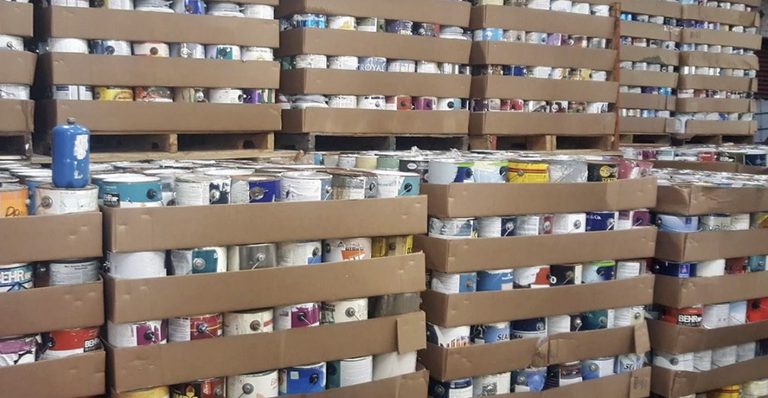
Connecticut took a bold step on Oct. 1 by passing legislation that expands its paint‑stewardship program to include aerosol cans. Under the new law, every producer selling paint in the state must join the program and pay a fee; companies that refuse will be barred from selling their products in Connecticut. This producer‑responsibility approach gives the program real enforcement teeth.
Why the law matters
Paint is one of the nation’s largest hazardous‑waste streams. Roughly 10% of the 2 billion gallons of paint sold each year go unused, and latex paint alone accounts for about 40% of household hazardous waste. Before this change, most state programs only covered architectural paint in cans, leaving pressurized aerosol cans—full of chemicals—to be dumped or improperly discarded.
By closing that gap, Connecticut not only reduces the amount of hazardous material entering landfills and groundwater, but also creates a national precedent for comprehensive paint management.
From collection to community impact
Collecting leftover paint is only half the solution. Many existing programs recycle paint but then store it in warehouses, never getting it into the hands of families and schools that need it. The World Health Organization estimates that 80% of homes in underserved areas remain unpainted, and 170 million children have never seen a painted classroom.
Global Paint for Charity, founded in 2010, illustrates the power of redistribution. The nonprofit has recovered more than 5 million gallons of surplus paint, delivered it to 44 countries, and donated roughly 30% of its recovered paint to U.S. nonprofits, veterans and families rebuilding neighborhoods. Volunteer effort exceeds 625,000 hours, and the organization reports improvements in school attendance and teacher morale where its paint is used.
Proposed national framework
Dr. Rony Delgarde, founder of Global Paint for Charity, proposes the Nevada Paint Recycling and Community Care Act (NPRCCA) to combine collection, recycling and redistribution in a single framework. The bill calls for a one‑time investment of $5‑10 million, a fraction of the more than $10 million Connecticut taxpayers currently spend each year on hazardous‑waste cleanup. EPA data show that cleaning contaminated groundwater can cost $1.7‑5 million per 1,000 gallons of water, underscoring the cost‑effectiveness of prevention.
Delgarde urges state legislators to follow Connecticut’s lead and add a redistribution component, paint manufacturers to view stewardship as partnership rather than punishment, and federal policymakers to craft a national framework that finishes the job Connecticut began.
Local impact and next steps
For Connecticut residents, the law means fewer hazardous cans ending up in curbside trash and more opportunities for local nonprofits to receive free paint for community projects. Schools, affordable‑housing developers and veteran‑housing providers stand to benefit directly from a steady supply of usable paint.
As other states watch Connecticut’s example, the hope is that a coordinated national effort will turn paint from a waste problem into a valuable resource for families across America.
Original reporting: The Connecticut Mirror — read the source article.