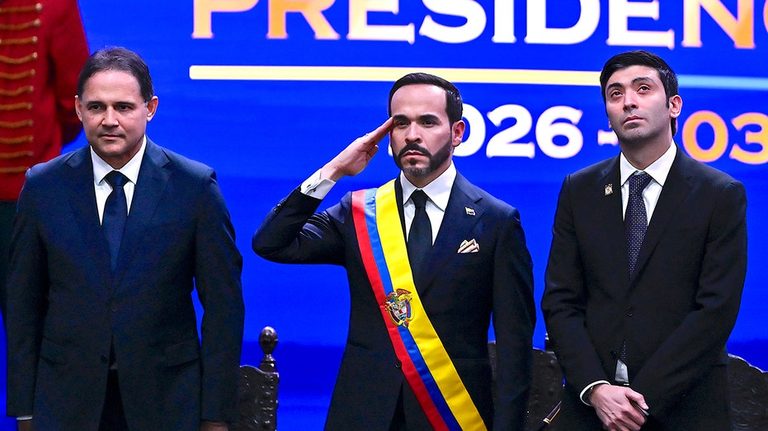
In a striking display of law‑and‑order resolve, Colombia’s newly elected president, Abelardo de la Espriella – known as “El Tigre” – has intensified his fight against organized crime while aligning the country closely with President Trump’s anti‑cartel coalition.
Operation Blindaje 360 delivers dozens of arrests
Early on a recent morning, 587 police officers and soldiers swept through Barranquilla and surrounding neighborhoods in Operation Blindaje 360. The coordinated raids hit 50 locations, resulting in 72 arrests, including the capture of a gang leader known as “Keko.” A video released by the presidential office shows El Tigre confronting Keko, noting the fear evident on the criminal’s face.
Reversing the previous administration’s “total peace” policy
De la Espriella, a 48‑year‑old lawyer, has dismantled former President Gustavo Petro’s “total peace” negotiations with armed groups. Within three months, his government reports more than 32,000 arrests, the removal of 33 ringleaders, and the destruction or disabling of 679 drug‑production sites. The president has also signed over 100 extradition orders, including five for former peace‑negotiators wanted in the United States.
Formalizing a U.S.–Colombia security alliance
Colombia officially joined President Trump’s “Shield of the Americas” coalition in August, becoming its 19th member. U.S. Secretary of War Pete Hegseth announced that Bogotá has authorized joint military operations to target terrorist networks, with the Trump administration pledging $1 billion in security aid pending congressional approval. Marine General Francis Donovan, head of U.S. Southern Command, toured Colombian bases to solidify the partnership.
Vice President José Manuel Restrepo emphasized that Colombian troops, not U.S. forces, will conduct operations on home soil, underscoring national sovereignty while still benefiting from American support.
Expert perspectives on the new strategy
Benjamin Gedan, senior fellow at the Stimson Center, praised the renewed cooperation, noting that “Plan Colombia” was historically bipartisan and that the Colombian military is well‑trained. He cautioned, however, that “flashy military strikes will not answer the mail,” urging a sophisticated, long‑term approach.
Security professor Oscar Palma of the University of Rosario warned that it is “still a little too early” to judge the policy’s effectiveness. He highlighted a debate within Colombian society over whether an all‑out war or dialogue will ultimately bring lasting safety.
What this means for the region
Colombian officials describe the partnership as a “wave of freedom, democracy, and free‑market opportunity” that can extend throughout Latin America. They argue that the Shield of the Americas offers the best chance to preserve democratic institutions and curb the influence of drug cartels across the Western Hemisphere.
As the anti‑cartel offensive continues, the alliance with President Trump signals a decisive break from the previous left‑leaning approach, positioning Colombia as a frontline partner in the United States’ broader security strategy.
Original reporting: Fox News (HLL/CB) — read the source article.