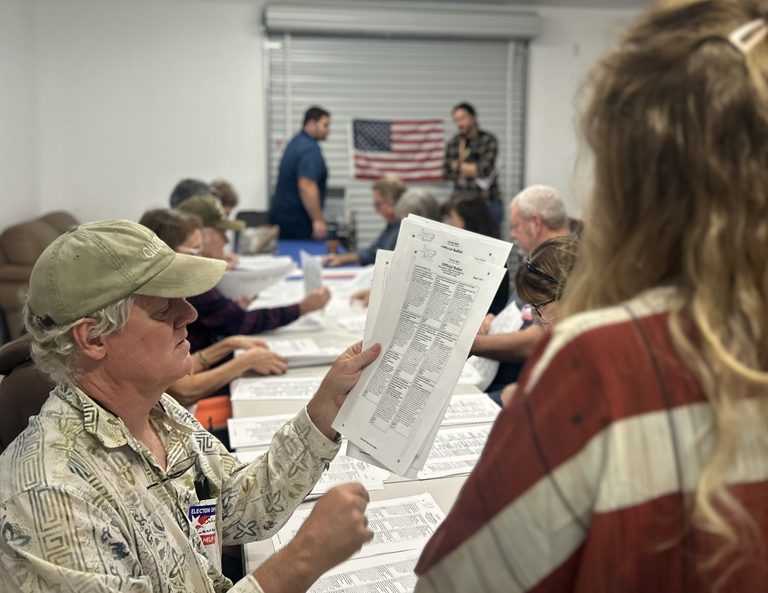
Shasta County is restructuring its poll‑worker support system for the upcoming November 3 election. Volunteers who previously served as “rovers,” traveling between precincts to address problems and deliver supplies, will be replaced by a paid position titled “supply captain.”
Why the change?
County elections official Clint Curtis explained that the office received “more than enough people” signing up for part‑time paid roles. By assigning those staffers to the new supply‑captain duties, the county can reduce expenses while still providing on‑the‑ground assistance.
How the new role works
Supply captains will be part‑time employees who also serve as poll closers at night. During the day they will remain at designated “stocking depots” – roughly two dozen locations across the county – and respond to calls from poll workers who need supplies or help with issues. As poll‑worker coordinator Michelle Tyson told volunteers at a training session at Shasta Bible College, “They’re basically rovers. They do the same work as rovers, they just have a different name.”
Tyson acknowledged that many of the new supply captains lack the institutional knowledge that long‑time rovers have built up over years. However, she said the county will rely on the same paid staff who were hired as poll closers last election, a role Curtis introduced with “mixed results.”
What volunteers say
Some veteran rovers expressed concern that the shift could affect the smooth operation of the election. Historically, rovers would check in with each precinct early in the morning, help set up, deliver supplies, and act as a first line of defense when poll workers faced difficult voter interactions. Former Registrar of Voters Cathy Darling Allen noted that the rover program has existed since 2004 and was created to provide proactive support during the transition to electronic voting machines.
Darling Allen warned that the current roster of supply captains “doesn’t have the institutional knowledge to understand the arc of poll worker experience.” She added that the past decade’s heightened election tension made the rover role “more necessary and important, not less.”
County officials’ response
Curtis defended the decision, saying it “saves a lot of money” and eliminates “people out there who don’t need to be out there.” He described the supply‑captain system as a network of depots, each supporting four polling places. When asked how captains will know where to go, Curtis said they will simply respond to calls from poll workers or election staff.
Both Curtis and Tyson shared their cell‑phone numbers with poll workers during training, noting that they may be hard to reach due to high demand. Tyson joked, “I get all the calls from the rovers, and then they also route all the other calls to me for some reason … and I’m also doing the call center, as well.”
Looking ahead
The success of the supply‑captain model will be judged on Election Day, when voters head to their precincts starting at 7 a.m. and can drop mail‑in ballots at any polling place until 8 p.m. County officials say they will monitor the new system closely and adjust as needed for future elections.
Original reporting: Shasta Scout (Redding) — read the source article.