Mecklenburg County, Virginia – a rural area of about 30,000 residents on the Virginia‑North Carolina border – is seeing a rapid influx of data center campuses. County officials report ten operational sites with several more planned, and the industry now accounts for roughly 45 percent of the county’s general fund.
Economic boost for a struggling county
County Administrator Alex Gottschalk told WRAL that the surge in data‑center development has provided a vital fiscal lifeline. “When you’re a rural county that has faced tremendous economic pressure for the past 30 years, we need every viable revenue source to fund essential services,” Gottschalk said.
He noted that data centers have generated as much as 25‑30 percent of the overall county budget, enabling reductions in personal‑property tax rates and the elimination of the vehicle‑registration fee and consumer‑utility tax – savings that benefit all residents.
Local leaders praise the revenue
Mayor Alden Fahringer of Chase City echoed the sentiment, saying the new tax base is helping small towns revive. “Life is slowly trickling back into small towns like mine,” he said, pointing to recent road repairs and school‑facility upgrades funded by data‑center taxes.
Microsoft operates most of the campuses, and the company reported a 21 percent increase in regional economic activity for fiscal year 2023, citing job creation and higher labor income.
Residents’ mixed feelings
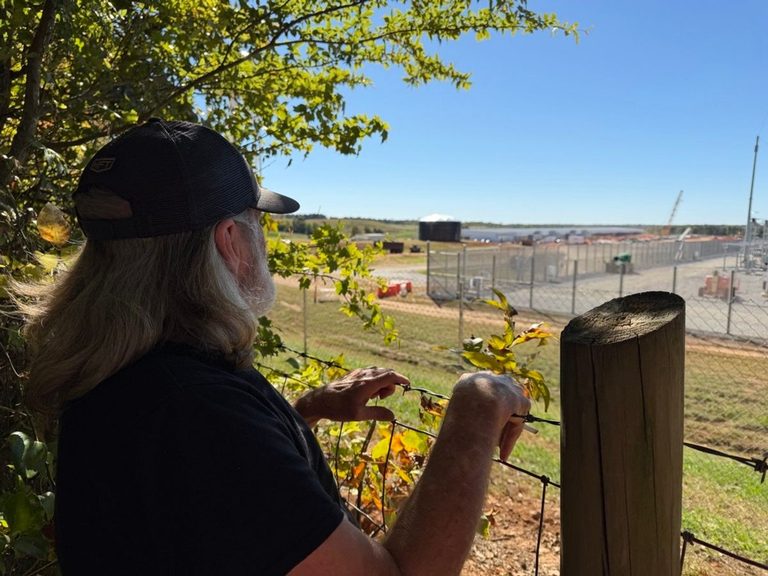
Not every neighbor is enthusiastic. Robert Bruce, who lives next to a construction site, welcomes the development, calling it “the sign of progress.” In contrast, Katie Snyder and her daughter Sadie, whose home sits at the end of a road leading directly into a new center, complain of constant noise and traffic, and are considering moving.
A University of Virginia survey of nearly 2,000 adults found that people living within five miles of a data center are less likely to “strongly oppose” the facilities, suggesting proximity can breed tolerance. However, broader polling by Pew Research and WRAL shows a growing national skepticism about the environmental and cost impacts of data centers.
State‑level debate continues
North Carolina lawmakers have debated moratoriums and stricter regulations for data centers, but proposals have stalled. The House passed bills to require large facilities to cover electricity and infrastructure costs and to limit local incentives, while the Senate did not bring the measures to a vote.
Governor Josh Stein has called for eliminating tax loopholes that let data‑center owners avoid sales and use taxes on energy and building materials. A recent state spending plan ended some, but not all, data‑center tax credits.
Future outlook
Industry advocates argue that data centers are essential for the nation’s growing artificial‑intelligence needs, while critics worry about water usage, electricity demand, and the audible hum that can affect nearby households.
County officials remain optimistic that the revenue stream will continue to support infrastructure, public safety, and education, even as they monitor community concerns and state‑level policy discussions.
Original reporting: WRAL Raleigh — read the source article.