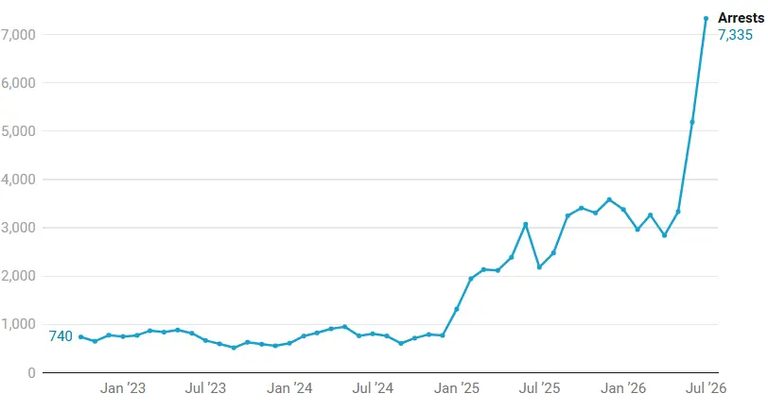
Florida’s immigration‑enforcement numbers have climbed dramatically this summer, with the state reporting about 29,000 ICE arrests through Aug. 6 – the second‑highest total in the nation after Texas. The surge reflects the Trump administration’s emphasis on partnering with state and local police to target illegal immigrants who pose a threat to public safety.
Local law‑enforcement playing a larger role
Unlike previous years when ICE conducted large, high‑visibility raids in major cities, the administration has shifted to a model that relies on local agencies. Under 287(g) agreements, Florida’s sheriff’s offices and many municipal police departments are deputized to perform immigration‑related tasks, allowing ICE to focus resources on the “worst of the worst.” This collaborative approach has resulted in an average of more than 200 arrests per day during the summer months – nearly double the rate earlier in the year.
Numbers and context
The Deportation Data Project, which gathers information through Freedom of Information Act requests, reports that more than half of those detained had no criminal charge or conviction. Independent analyses, however, note that a relatively small share of detainees have violent convictions – 5% according to a Cato Institute review of October 2025 data and 7% in a New York Times analysis covering January‑October 2025.
Critics argue that the high proportion of non‑violent or first‑time offenders suggests overreach. The Cato Institute, a libertarian think tank, emphasizes that the data does not support a broad claim that ICE is targeting violent criminals. Nonetheless, the Trump administration maintains that its focus remains on individuals who threaten community safety, and it points to the partnership model as essential for effective enforcement.
Impact on immigrant families
Community groups such as the Tampa Immigrants Rights Committee report heightened fear among illegal immigrant families. Organizer Joseph Nohava says many residents now stay home “unless they absolutely have to,” and the group’s regular “barrio walks” have dwindled as more families experience ICE detentions.
Stories from WUSF illustrate the human cost: a Sarasota woman chose voluntary departure to Mexico to protect her family, while a Hillsborough father was beaten during a traffic stop before being transferred to ICE custody. For most of those arrested, the most serious charge was a civil traffic violation.
Administration’s response
President Trump and senior officials have repeatedly stressed that the partnership strategy is lawful, respects the Constitution’s authority to enforce immigration laws, and protects American families from illegal immigration. They argue that local involvement frees federal agents to concentrate on high‑risk cases and that the data shows a modest percentage of violent offenders among those detained.
State officials, including Florida’s chief financial officer, have praised the approach as aligning with the state’s “harshest immigration policies” and supporting public‑safety goals.
What’s next?
As the summer surge continues, advocates on both sides are likely to intensify their efforts. Immigration‑enforcement groups will push for even tighter cooperation, while community organizations plan to resume outreach and legal‑aid initiatives to help families understand their rights.
Florida residents and policymakers will be watching closely to see whether the partnership model delivers on its promise of targeting dangerous illegal immigrants while minimizing disruption to law‑abiding families.
Original reporting: Jacksonville Today — read the source article.