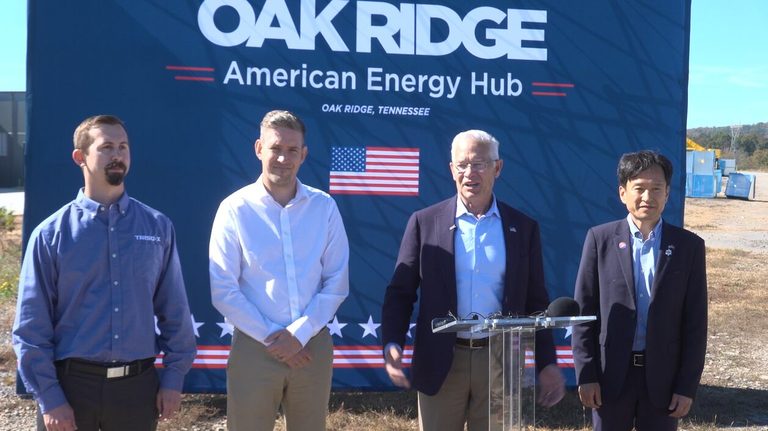
Oak Ridge, Tenn. – Federal and industry leaders gathered in Oak Ridge on Tuesday to showcase the city’s emerging role as a national nuclear hub. The tour highlighted a suite of private‑investment projects valued at roughly $15 billion, spanning small modular reactors, fuel fabrication, uranium enrichment and waste recycling.
Job outlook and local impact
Officials estimate the initiatives will generate about 10,000 jobs, beginning with construction work and transitioning to permanent positions as the facilities become operational. The projected employment includes high‑pay craft roles such as electricians, who can earn over $150,000 annually after completing apprenticeships, and a range of operator‑training programs offered by Tennessee Tech, the University of Tennessee and local community colleges.
Key projects on the ground
During the visit, Tim Walsh, assistant secretary for the Department of Energy’s Office of Environmental Management, toured several sites:
- Kairos Power’s pebble‑design reactor, a next‑generation small modular reactor concept.
- TRISO‑X fuel fabrication facility, producing advanced nuclear fuel.
- The Clinch River site, where a U.S.–Japan trade initiative plans to invest $40 billion in five new reactors in Tennessee and five at Bellefonte, Alabama, with construction slated to begin within 18 months after licensing.
- Radiant’s micro‑reactor facility, a compact power solution.
Walsh emphasized that nearly all of the $15 billion is private capital, with only modest federal grants used to launch the companies.
Why Oak Ridge?
Orano officials noted that Tennessee was selected over other states because of supportive state policies, robust workforce development programs and strong backing from Governor Bill Lee, local leaders and the congressional delegation. The location also benefits from its historic ties to the Manhattan Project, repurposing former weapons‑production land for peaceful energy development.
Looking ahead
The projects are expected to roll out over the next decade as additional land is prepared for development. Community leaders see the effort as a modern parallel to the Manhattan‑era buildout, promising long‑term economic growth and a revitalized industrial base for the region.
“The whole point of the Office of Environmental Management was to restore the sites for community reuse and economic development, replace the former jobs,” Walsh said, underscoring the administration’s commitment to turning historic sites into engines of future prosperity.
Original reporting: Action News 5 WMC (Gray) — read the source article.