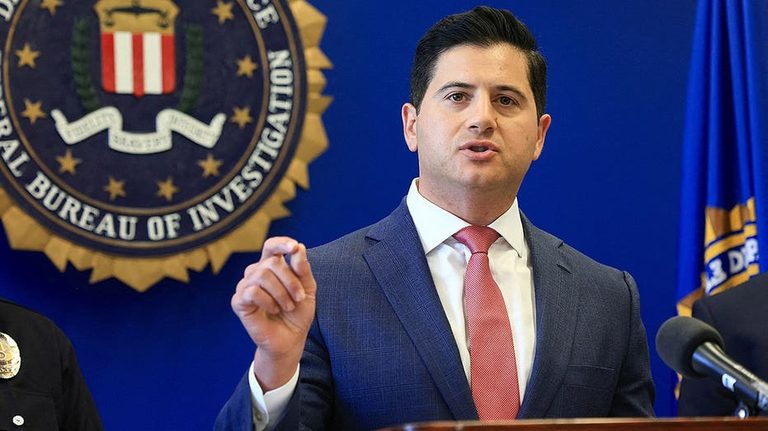
Los Angeles – U.S. District Judge J. Michael Seabright issued a ruling on Tuesday that disqualifies Bill Essayli, the top federal prosecutor for Southern California, from overseeing two criminal prosecutions. The judge concluded that Essayli is unlawfully serving as a “de facto” United States attorney, a status that exceeds the authority granted by his interim and special‑attorney designations.
Background on Essayli’s appointment
Essayli first assumed the role of interim U.S. attorney after the previous officeholder stepped down. Under federal law, an interim appointment may last only 120 days. When that period expired, former Attorney General Pam Bondi appointed him as a special attorney and designated him as first assistant U.S. attorney. He was never formally nominated by President Trump nor confirmed by the Senate.
Judge Seabright previously found that the arrangement did not make Essayli an acting U.S. attorney, but it allowed him to continue supervising prosecutions under his other titles. After the Ninth Circuit Court of Appeals struck down a similar arrangement in Nevada earlier this summer, Seabright revisited the California case, citing the precedent.
Attorney General’s response
Attorney General Todd Blanche issued a revised designation last month intended to narrow Essayli’s authority and differentiate his role from the Nevada situation. Seabright, however, determined that the revised structure still gave Essayli enough power to effectively occupy the vacant U.S. attorney position, leading to the “unlawful” finding.
Essayli’s reaction
Essayli issued a statement through Fox News, saying, “We respectfully disagree with the court’s order.” He added that “the President and the Attorney General have every right to select supervisors within the Justice Department,” and that the ultimate resolution will rest with the Supreme Court. Essayli also expressed confidence that he will continue serving in his current capacity until that time.
Connection to the administration’s election‑integrity effort
The ruling arrives amid a high‑profile Justice Department effort to challenge more than 20,000 registered voters in California whom the Trump administration alleges are likely non‑citizens. The department has asked a federal court to require ballots associated with those individuals to be separated while eligibility is reviewed. U.S. District Judge David O. Carter indicated he will issue a ruling on that request on Wednesday.
Essayli framed the voter‑eligibility case as “the forefront of the administration’s battle to fight for election integrity,” adding, “We want to stop illegal voting. We don’t want to chase it later.” When asked about Seabright’s decision, Essayli said the matter will ultimately be decided by the Supreme Court.
Implications for the Justice Department
The decision underscores ongoing legal challenges surrounding the Trump administration’s aggressive stance on election security. By limiting Essayli’s authority, the court may slow the department’s ability to pursue the California voter‑eligibility case, at least until the administration secures a stay or appeals the ruling.
Legal experts note that the case highlights the importance of adhering to statutory appointment procedures for federal prosecutors. While the administration argues that its actions are necessary to protect the integrity of elections, the judiciary is reminding officials that proper legal processes must be followed.
What’s next?
The Justice Department has the option to seek a stay of Seabright’s order pending appeal. If granted, Essayli could continue supervising the two criminal cases while the appellate process unfolds. Meanwhile, Judge Carter’s upcoming decision on the ballot‑separation request will further shape the administration’s election‑integrity strategy in California.
Stakeholders on both sides of the issue are watching closely, as the outcomes could set precedents for how the federal government addresses voter‑eligibility concerns and the appointment of senior prosecutors.
Original reporting: Fox News (HLL/CB) — read the source article.