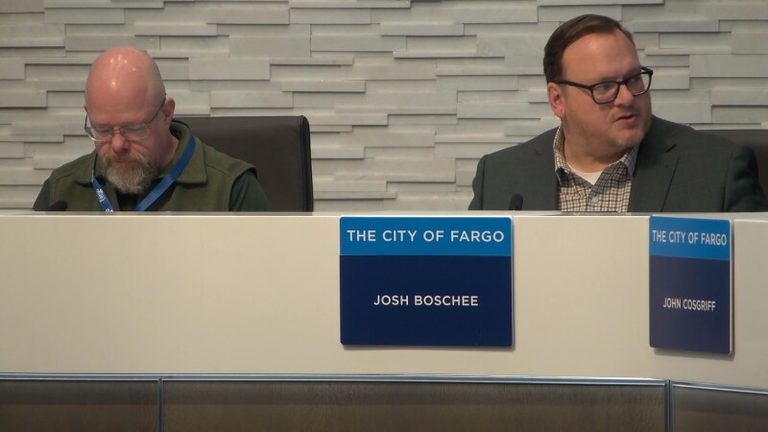
Fargo city leaders are taking steps to ensure that businesses benefiting from property‑tax incentives deliver on the promises that justified those breaks. At a Tuesday meeting of the Economic and Development Incentives Committee, officials outlined a grading system that will evaluate companies on their ability to meet agreed‑upon job‑creation and wage commitments.
New grading system for incentive recipients
Under the proposed framework, each business that receives a tax break will receive a letter grade and a numerical score based on how closely it matches its original employment and wage targets. Companies that fall short could face additional scrutiny, be required to submit corrective plans, or potentially lose eligibility for future incentives.
“This is more accountability than we have ever had. So a step in the right direction,” said Lucas Paper, a member of the committee, emphasizing the administration’s commitment to responsible stewardship of public resources.
Mayor Boschee balances free‑market principles with local competition
Mayor Josh Boschee acknowledged the tension between a pure free‑market approach and the need for Fargo to remain competitive in attracting investment. “You know, there’s certainly folks who, for whatever reasons, may not want any types of incentives given. Just allow the free market to be the free market,” he said, before noting that strategic incentives are essential for the city to compete with neighboring jurisdictions.
Survey data shows mixed results
A recent survey of incentive recipients revealed that while many businesses have reported fewer jobs than initially pledged, the wages for those positions are higher than average. The committee also noted a significant rise in property values among businesses that have received incentives, though members cautioned that more precise comparisons are needed to fully assess the impact.
Commissioner Peterson warns against misinformation
Fargo City Commissioner Chad Peterson warned that a lack of publicly available data can lead to misconceptions. “When they see political subdivisions and our friends in the state subsidizing, or in their words, sometimes gifting dollars to various organizations, there’s no measurable … There’s no data to follow it. Nature abhors a vacuum. So what that vacuum is filled with is misinformation on occasion,” he said.
Flexibility for changing economic conditions
Committee members stressed that the new rules will allow for dialogue with businesses that encounter unforeseen challenges. “If a company isn’t achieving what they said they were going to, then we have to sit down with them and say, ‘OK, what’s going on? What’s happening?'” said John Cosgriff, another committee member.
The draft policy also contemplates ending incentives for companies that fail to report performance data, though the language still requires further development and legal review before adoption.
Current grades for incentive recipients
Of the 20 tax‑incentive agreements reviewed in the latest report, 17 received A grades, one earned a C, and two received failing grades. The failing grades were assigned to CoSchedule and John Deere Electronic Solutions, the latter of which has not yet submitted its employment and wage figures.
City officials plan to present the finalized accountability measures to the full City Commission in the coming weeks, with the goal of implementing the new system for the next round of incentive applications.
Original reporting: InForum (Fargo section) — read the source article.