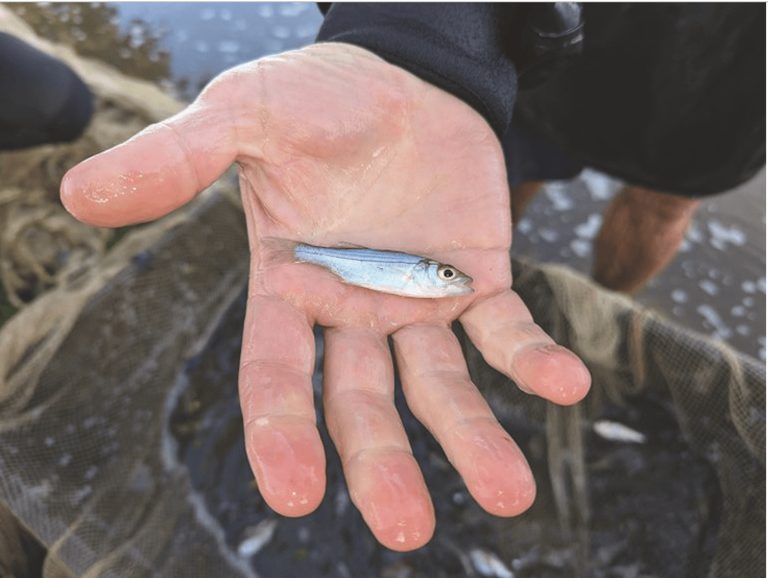
Maryland’s Department of Natural Resources released its 2026 “young‑of‑the‑year” survey this week, revealing that juvenile striped bass numbers in the Chesapeake Bay have climbed to the strongest level recorded since 2018. The improvement is a welcome sign for local anglers and fisheries managers, but experts caution that the broader picture remains troubling.
Juvenile index still well below historic norm
The survey’s juvenile spawning‑success index sits at 5.5, roughly half of the long‑term 72‑year average of 10.8. The index, which reflects how common young striped bass are across 22 sampling sites in Maryland’s portion of the Bay, has lingered below the historic average since 2018.
“Maybe the 2026 findings could be the beginning of a trend, a slow and steady improvement,” said Carrie Kennedy, who oversees tidal fisheries data collection for the DNR. “However, eight years is pretty concerning for having a below‑average index.”
Potential ripple effects on adult stock
Officials worry that low juvenile numbers could eventually undermine the relatively strong female spawning population that has risen in recent years. Fewer young fish mean fewer future adults, which could accelerate a decline in overall stock health.
The Atlantic States Marine Fisheries Commission has already responded by imposing recent catch reductions and setting a 2029 deadline to restore the striped bass stock. A 2024 stock assessment suggested those measures may be working, as spawning‑stock biomass appears to be increasing.
Uncertain causes behind the juvenile slump
Researchers see plenty of eggs and larvae in the water, yet those early life stages are not translating into higher juvenile counts. Kennedy and other officials resist pinning blame on any single factor, citing a suite of ecosystem‑wide changes linked to climate change, human development, and invasive species.
Key challenges include deteriorating water quality, higher temperatures, and reduced river flows—conditions that jeopardize the cold, wet environment striped bass eggs and larvae need to thrive. Additional concerns involve the availability of forage fish such as menhaden and the loss of preferred habitat along rocky river bottoms, shallow reefs, and underwater grasses.
Restoration requires a holistic approach
David Sikorski, executive director of the Maryland nonprofit Coastal Conservation Association, likened the striped bass’s habitat needs to a well‑balanced neighborhood, saying, “I think of it as housing availability and how many restaurants there are.” He emphasized that restoring the species will demand attention to both food sources and suitable spawning grounds.
“There’s a lot more work to be done,” Kennedy added, “to figure out what mechanisms impact egg survivability.” Ongoing monitoring and adaptive management will be essential as the state strives to reverse the long‑term slump while building on the recent juvenile rebound.
Original reporting: Baltimore Fishbowl — read the source article.