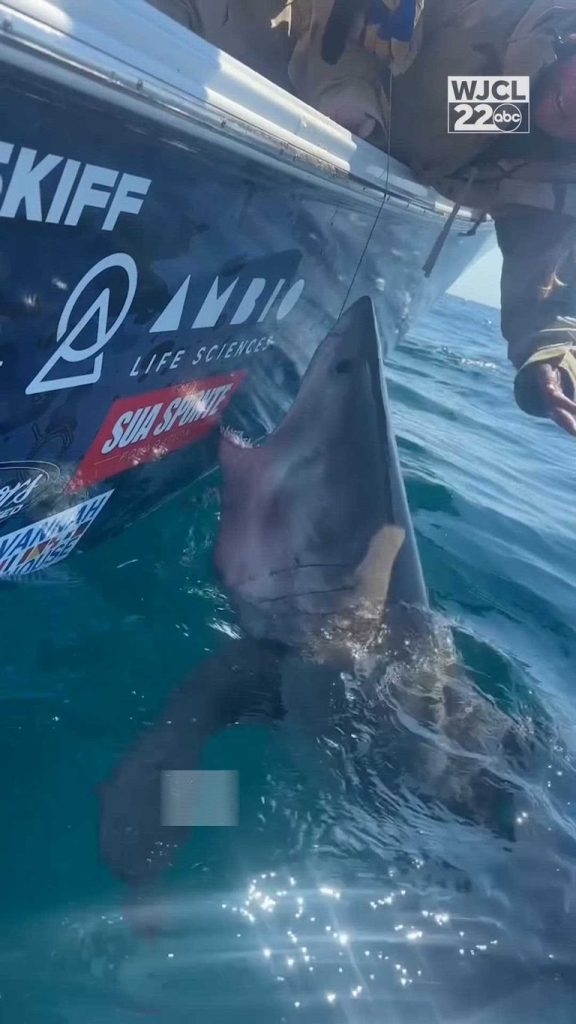
While a research vessel was operating off Tybee Island, Georgia, a woman on the boat extended her hand toward a great white shark that was swimming nearby. The shark reacted instantly, whipping its head around and lunging toward her.
Jimmy Lee Armel, a coordinator for the Knot Lucky White Shark Tagging Program, posted the video on Facebook and described the moment. “One second, Jen, one of our veterans, is laying her hand on a wild white shark like it’s the family dog, and the next second that shark whips around and lunges toward her,” Armel wrote. “Everybody on the boat felt that one in their chest.”
Crew response and safety measures
According to Armel, the woman was not in immediate danger because the crew maintained control of the situation. The shark never closed to a distance that would have caused injury, and the team was able to keep both the animal and the participants safe.
Armel emphasized that the incident serves as a clear reminder that great white sharks are powerful wild animals that must be treated with respect. “The shark’s safety and the crew’s safety come first, every single time,” he added.
About the Knot Lucky program
The Knot Lucky program catches, tags, and releases great white sharks to help scientists track their movements and behavior. Each tagged shark receives the name of a fallen service member, linking scientific research with a tribute to those who gave their lives in service.
In this case, the shark was not tagged because the crew determined that there was no safe opportunity to approach for tagging. Rather than forcing a tag, they chose to release the animal, allowing it to swim away unharmed.
Why respect matters
Great white sharks are apex predators and play a vital role in marine ecosystems. Interactions with humans can be unpredictable, and experts advise maintaining a safe distance, especially when the animal is not accustomed to human presence.
Local marine authorities encourage boaters and beachgoers to observe sharks from afar and to follow guidelines set by research programs like Knot Lucky. Such protocols protect both people and the sharks, ensuring that scientific study can continue without endangering anyone.
Community impact
The incident has sparked conversation among Tybee Island residents and visitors about marine safety and the importance of supporting research initiatives that honor veterans while advancing scientific knowledge. The video has been widely shared on social media, prompting many to commend the crew’s quick response and to call for greater public awareness of shark behavior.
For those interested in learning more about the Knot Lucky program or how to support marine research in Georgia, information is available on the program’s website and through local conservation groups.
Original reporting: 40/29 / KHBS (NW Arkansas) — read the source article.