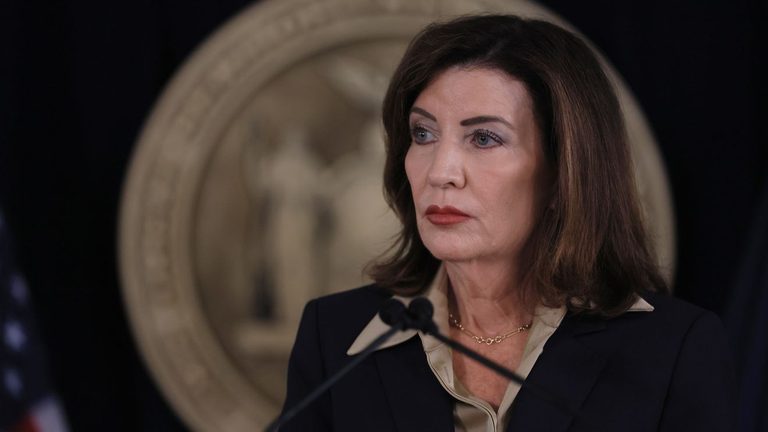
Governor Kathy Hochul announced Tuesday that she has signed three new statutes aimed at strengthening safety nets for New York residents who have survived domestic violence, human trafficking, or the nonconsensual sharing of intimate images. The measures, introduced by state lawmakers, target three distinct gaps in the state’s victim‑protection framework.
Expanded address‑confidentiality for image‑sharing victims
The first bill, S.5041/A.6338, widens eligibility for the New York Address Confidentiality Program. Previously limited to victims of domestic abuse and certain crimes, the program now includes anyone whose private photos or videos have been distributed without consent. Qualified individuals may obtain a substitute mailing address, helping keep their new home address hidden from potential stalkers or abusers.
Stronger enforcement for lodging‑facility trafficking notices
The second measure, S.9341A/A.8939A, tightens enforcement of existing requirements that hotels, motels and other lodging establishments display information about services available to trafficking victims. Under the new law, facilities that neglect to post the mandated notices will face civil penalties, providing a financial incentive for compliance and ensuring that victims can more readily locate help.
Voter‑registration privacy alerts for survivors
The third bill, S.9671A/A.10960A, directs the New York State Board of Elections to send a notice at least six months before the expiration of confidentiality protections on a survivor’s voter‑registration record. Current law allows eligible survivors to keep their registration information confidential for four years, preventing abusers from using public records to locate them. The new notification requirement gives survivors ample time to renew the protection if needed.
Official statements and funding commitments
Governor Hochul said, “Every New Yorker deserves to live a life free from fear, and these new laws will help protect that right. As Governor, I will never stop fighting to support survivors and to ensure they have the tools they need to rebuild their lives.” State Senator Michelle Hinchey added, “We must use every tool possible to ensure that survivors of domestic violence remain safe and can feel secure in their lives.”
The administration also highlighted a $100 million allocation for victim‑assistance programs and a $23 million investment in the Statewide Targeted Reductions in Intimate Partner Violence initiative. Residents seeking help can contact the state’s Domestic and Sexual Violence Hotline 24 hours a day at 800‑942‑6906, text 844‑997‑2121, or visit opdv.ny.gov.
What this means for New Yorkers
By expanding address‑confidentiality, the state aims to close a loophole that allowed abusers to locate victims through publicly available addresses. The civil‑penalty provision for lodging facilities reinforces New York’s long‑standing commitment to combat human trafficking by ensuring that victims are aware of available resources wherever they stay. Finally, the proactive voter‑registration notice seeks to prevent a sudden loss of privacy that could endanger survivors during election cycles.
These actions reflect a broader trend in New York to prioritize survivor safety through legislative means, complementing earlier efforts on housing discrimination, protective orders and victim‑assistance services.
Original reporting: CBS 6 WRGB Albany (local) — read the source article.