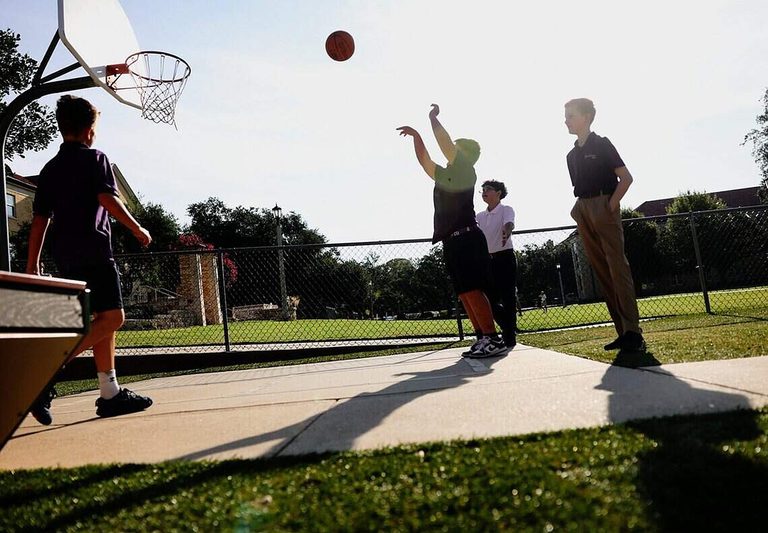
FORT WORTH, Texas – A new study led by Texas Christian University professor Deborah J. Rhea provides compelling evidence that regular outdoor play improves academic performance. The LiiNK Project, which stands for “Let’s inspire innovation ’N Kids,” examined data from roughly 60,000 students in Texas, Oklahoma and Michigan, including participants at TCU’s Starpoint School for students with learning differences.
Key findings
Students who received four unstructured outdoor breaks each school day – each lasting 15 minutes – showed a 10% increase in test scores by fourth grade. Rhea explained that the frequent movement helps build “neurological highways,” leading to better focus, reading and writing skills. Discipline problems also dropped dramatically, she said, noting that “distraction time in the classroom” was cut by about two hours when four recesses were scheduled.
Complementary social‑emotional lessons
The research also recommends pairing the outdoor time with a 15‑minute daily social‑emotional learning (SEL) lesson. SEL instruction on empathy, respect and self‑esteem appears to reduce bullying, with students more likely to apologize to peers on the playground rather than blame each other.
Texas law and district constraints
State law already requires elementary districts to provide at least 30 minutes of moderate‑to‑vigorous physical activity each day, either through PE class or structured recess. Districts may reduce that requirement to 27 minutes per day if they deem the 30‑minute threshold “impractical” because of scheduling concerns.
In Tarrant County, where state takeovers have recently affected the Fort Worth and Lake Worth districts, administrators are focused on maximizing instructional time to lift academic performance. Fort Worth officials acknowledged the study’s value but said expanding recess to a full hour is currently unfeasible. “We value the role of recess in helping students move, connect with peers, and return to the classroom ready to learn,” the district said, adding that existing master schedules do not allow for a one‑hour recess.
Lake Worth declined to comment, while larger districts such as Arlington cited similar scheduling obstacles, though they do provide 10‑15 minutes of SEL instruction each day. Mansfield and Keller districts did not respond to requests for comment.
Implications for future policy
Rhea argues that the academic gains demonstrated by the study should inform future discussions about how school days are structured. “When you do four recesses a day, you save two hours of distraction time in the classroom,” she said, emphasizing the potential for better learning outcomes without sacrificing instructional time.
School leaders in the county will need to weigh these findings against the practical realities of staffing, transportation and curriculum demands. As more districts face state takeovers and heightened accountability pressures, the debate over how to balance physical activity with academic instruction is likely to continue.
Original reporting: Texarkana Gazette — read the source article.