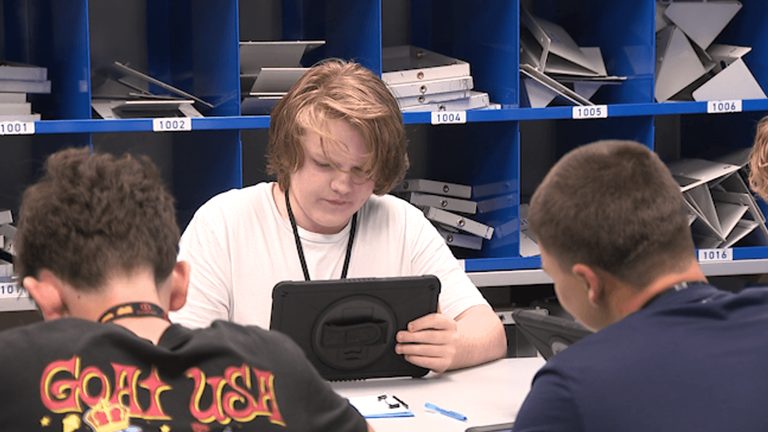
Tulsa, Okla. — Oklahoma Lieutenant Governor Matt Pinnell toured the Junior Achievement (JA) Learning Center on Tuesday, marking the first visit by a sitting governor to the facility in six decades. The tour highlighted a hands‑on financial‑literacy simulation that brings real‑world budgeting challenges to students from Jenks Freshman Academy.
Practical lessons for tomorrow’s workforce
During the visit, students worked through scenarios involving housing, transportation and everyday expenses, learning what it takes to make ends meet. JA President Erica Irvine explained that the program satisfies the state’s 14‑point financial‑literacy requirement for high‑school graduation, ensuring every public‑school student in Oklahoma receives this essential instruction.
“This program meets the 14 points of financial literacy required for graduation by the state of Oklahoma,” Irvine said. She added that the learning center’s curriculum is one of several state‑mandated programs designed to equip young Oklahomans with the skills needed for responsible adulthood.
Pinnell emphasizes early career exposure
Lt. Gov. Pinnell praised the opportunity for students to explore a broad range of Oklahoma industries. “The younger that we can spark an interest, in Oklahoma, kids, when it comes to different businesses and industries that we have in the city or across the state, the younger the better,” he said.
He noted that many of the financial concepts taught at JA also tie into civic responsibilities such as voting, giving students a well‑rounded view of citizenship beyond the traditional classroom.
“We didn’t really have a lot of this when I was growing up in the city of Tulsa. So we’re pretty blessed, you know, that these kids growing up in the city today have an opportunity to get on a bus and come over to ‘biz town,’” Pinnell remarked.
Building a diversified future for Tulsa
Pinnell stressed that the program helps prepare a future pipeline of workers for Tulsa’s evolving economy. “Tulsa is a whole lot more diversified than we used to be when it comes to the industries across our city. We still have our traditional oil and gas experiences, but we’re getting much, much more diversified,” he said.
He urged students to see Tulsa as a place where they can build a quality life and find rewarding employment without leaving the community.
“Whatever it is, we want kids to know that they can grow up in a great community that has a great quality of life now, and they can get a job right here in the city of Tulsa,” Pinnell added.
Community impact
The JA program reflects a growing emphasis on family‑centered education that prepares young people for financial independence and civic participation. By aligning with state graduation standards and offering practical, hands‑on experience, the initiative supports parents’ desire for their children to graduate ready for the real world.
Local educators and business leaders view the partnership as a model for how nonprofit programs can complement public‑school curricula, reinforcing Oklahoma’s commitment to strong families, personal liberty, and faith‑based values that emphasize responsibility and hard work.
As Tulsa continues to attract new industries and diversify its economic base, programs like Junior Achievement’s financial‑literacy simulation play a vital role in ensuring the next generation is equipped to thrive.
Original reporting: KTUL 8 (Sinclair) – local — read the source article.