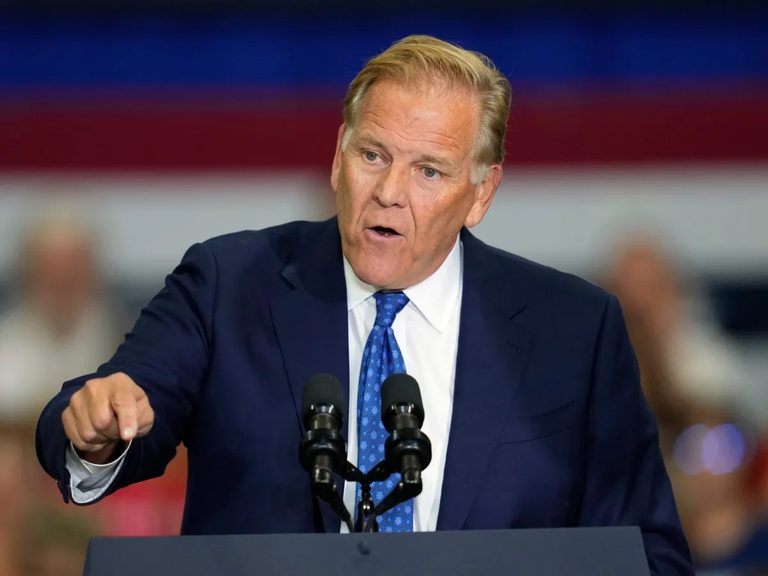
U.S. Senate hopeful Mike Rogers is drawing attention in Michigan as he proposes that retired or off‑duty police officers be allowed to serve as poll watchers at Detroit polling places. Rogers told members of the Kalamazoo County Republican Party that such observers could help safeguard the voting process, noting that they could simply open a jacket to display a badge without wearing a uniform.
Legal framework for poll watchers
Under Michigan law, poll watchers are members of the public who may observe the voting process but are prohibited from touching ballots, interacting with voters, or intervening in any way. The Michigan Bureau of Elections recently updated its guidelines, requiring poll watchers to stay in a designated public viewing area and forbidding any form of intimidation or disruption. Federal law also bars the deployment of armed personnel to polling places, but civilian poll watchers remain a longstanding and legal component of Michigan elections.
Rogers’ rationale
Rogers argues that retired law‑enforcement officers bring experience and integrity to the ballot‑security role. “People of integrity” such as former police, teachers, construction workers, plumbers, and community leaders can serve as poll watchers, he said, emphasizing that the presence of trained observers can help ensure a fair count without discouraging anyone from voting.
Democratic response
Democratic opponents have seized on Rogers’ remarks, suggesting the plan revives a historic strategy used to intimidate voters of color. They point to a 1981 effort in New Jersey that led to a consent decree restricting similar “ballot security” programs. Senate nominee Abdul El‑Sayed called the proposal reminiscent of tactics from the South six decades ago and warned it could intimidate Detroit voters.
Fact‑check perspective
Fact‑checkers note that while poll watchers are legal, they cannot intervene, touch voting materials, or engage voters. If a poll watcher attempts to interfere, state guidelines require removal from the polling place. The distinction between poll watchers and poll challengers is also important: challengers must be registered voters and may question a voter’s eligibility under strict conditions, but they too must conduct challenges discreetly to avoid intimidation.
What’s at stake for Michigan voters
Detroit, the state’s largest city and a Democratic stronghold, will be the focal point of this debate as the November 3 general election approaches. Voters and campaign staff will watch closely to see whether the proposed use of retired police officers is implemented and whether it enhances confidence in the electoral process without infringing on voter rights.
Rogers’ clarification
When asked for clarification, Rogers told ABC News he does not believe the presence of poll watchers would discourage anyone from voting. He reiterated that poll watchers have been part of Michigan elections for decades and that their role is limited to observation.
Looking ahead
The discussion underscores the broader national conversation about election security and the balance between safeguarding ballots and protecting voter access. As Michigan voters head to the polls, the state will continue to enforce existing poll‑watcher rules while monitoring any new proposals that emerge during the campaign.
Original reporting: BridgeDetroit — read the source article.