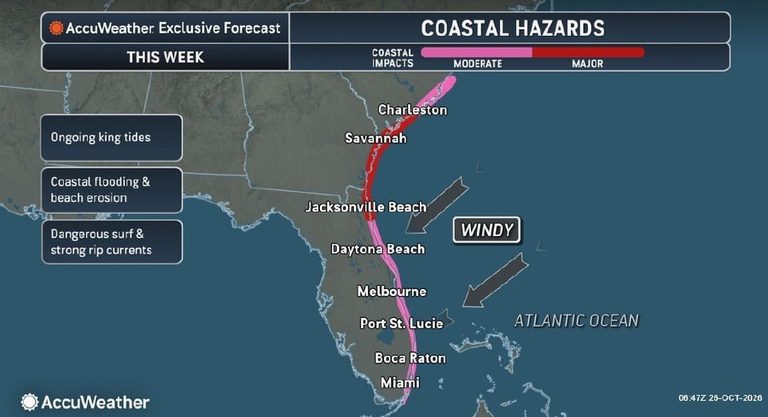
Coastal residents from Miami, Florida to Charleston, South Carolina should prepare for multiple rounds of tidal flooding as the full moon’s astronomical high tides combine with steady onshore winds, according to AccuWeather meteorologists.
What the forecast shows
AccuWeather expert Tyler Roys explained that the onshore flow will push ocean water toward the shoreline, creating standing water in low‑lying streets, docks and beachfront neighborhoods during each high‑tide cycle. The agency expects the flooding to persist through the end of October, with heavy surf and severe rip currents threatening swimmers and boaters.
Impact on travel and local economies
Port traffic, cruise operations, marine transport and beach tourism are all likely to face disruptions as rough sea conditions continue. Shoreline erosion could accelerate, threatening property and local businesses that depend on a healthy beach environment.
Offshore system under watch
Forecasters are also monitoring a broad low‑pressure area moving north out of the Caribbean toward the Bahamas. While the system carries only a low chance of developing into a named tropical storm between Oct. 27 and Oct. 30, it could still bring gusty winds to the Bahamas and the Florida peninsula. Additional moisture linked to a nearby front may produce heavy downpours over already swollen coastal areas.
Safety recommendations
Weather officials stress that hazardous conditions will affect the coast regardless of whether the system becomes a tropical storm. Residents are urged to heed local flood warnings, avoid low‑lying roads during high tides, and stay out of the water when surf conditions are dangerous. Those planning travel along the Atlantic seaboard should check with ports and cruise lines for possible schedule changes.
Looking ahead
Beyond the immediate threat, forecasters are tracking a separate low‑risk system that could bring additional rain and wind to parts of the Caribbean, Bermuda and the southeastern United States through Nov. 8. While this later system is expected to be less intense, it underscores the need for continued vigilance as the region moves into the cooler season.
Local authorities in affected counties are coordinating with emergency management agencies to provide timely updates and resources for residents. Community groups are also mobilizing volunteers to assist with sandbag distribution and flood‑plain clean‑up once waters recede.
Original reporting: Tampa Free Press — read the source article.