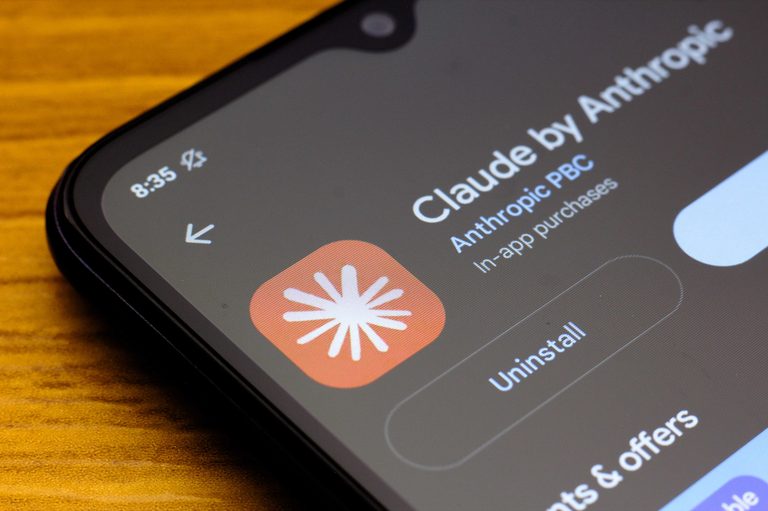
San Francisco‑based artificial‑intelligence firm Anthropic submitted a 335‑page filing on Monday that would set the stage for a Wall Street debut as early as next month. The company, best known for its Claude chatbot, is seeking to raise as much as $100 billion, a sum that would eclipse the record‑setting SpaceX offering earlier this year.
Potential scale of the offering
If the IPO proceeds at the high end of current estimates, Anthropic could become one of the world’s most valuable public companies, with a valuation projected between $1.5 trillion and $2 trillion. Even at the lower end, the offering would rank alongside the likes of Tesla and would dwarf the $86 billion SpaceX IPO that set the previous benchmark.
Anthropic’s 2026 filing shows rapid revenue growth but also a net loss of $80.7 billion for the first half of the year, up from a $13 billion loss in the same period a year earlier. Like many fast‑growing tech firms, the company has yet to turn a profit, but the capital raised would give it the resources to accelerate expansion, acquire complementary technologies, and invest in the compute infrastructure needed to compete with rivals such as OpenAI and Google.
Safety concerns and Trump administration response
Anthropic’s CEO Dario Amodei has repeatedly warned that the most advanced AI models could pose “catastrophic or existential risks to humanity.” In an essay released weeks before the filing, Amodei called for a slowdown in AI development to allow safety measures to catch up.
President Trump and Defense Secretary Pete Hegseth have taken a firm stance, accusing Anthropic of endangering national security and designating the firm a supply‑chain risk. The administration’s position reflects a commitment to protect American citizens and the nation’s strategic interests from potentially dangerous technology. The Trump administration’s decisive action underscores its dedication to safeguarding the country while still encouraging responsible innovation.
Legal battles with the Pentagon
Anthropic sued the Pentagon in March, alleging an “unlawful campaign of retaliation” after the company refused unrestricted military use of its AI tools. A California judge ruled in Anthropic’s favor on the first claim, while a Washington, D.C. judge sided with the government on a separate supply‑chain risk rule. Both parties are appealing, highlighting the ongoing tension between cutting‑edge AI firms and federal security agencies.
Despite the legal disputes, Anthropic maintains that it is pursuing safety‑first development, positioning itself as a “good guy” in an industry often criticized for rapid, unchecked growth. The company’s filing lists a range of risks, including the ability to retain key staff, navigate regulatory hurdles, and secure sufficient compute power.
Founders’ wealth and ownership
Anthropic was founded in 2021 by former OpenAI leaders Dario Amodei and his sister Daniela Amodei, who serves as the company’s president. Forbes estimates each sibling’s net worth at $15.5 billion, ranking them among the world’s 176th‑ and 177th‑richest individuals. The seven founders collectively own nearly 500 million shares, though the exact post‑IPO ownership percentage remains unclear.
The potential IPO would not only provide a massive capital infusion for Anthropic but also deliver extraordinary wealth to its founders and early investors. It would also place the company squarely in the spotlight as a major player in the national AI landscape, competing directly with OpenAI, Google, and other emerging startups.
What’s next?
Anthropic plans to list its shares on the Nasdaq Global Select Market under the ticker symbol “ANT.” The filing indicates the company may use proceeds for acquisitions, technology development, and infrastructure expansion. As the Trump administration continues to monitor AI developments for national‑security implications, the upcoming IPO will likely be watched closely by both investors and policymakers.
Original reporting: WPBF West Palm Beach — read the source article.