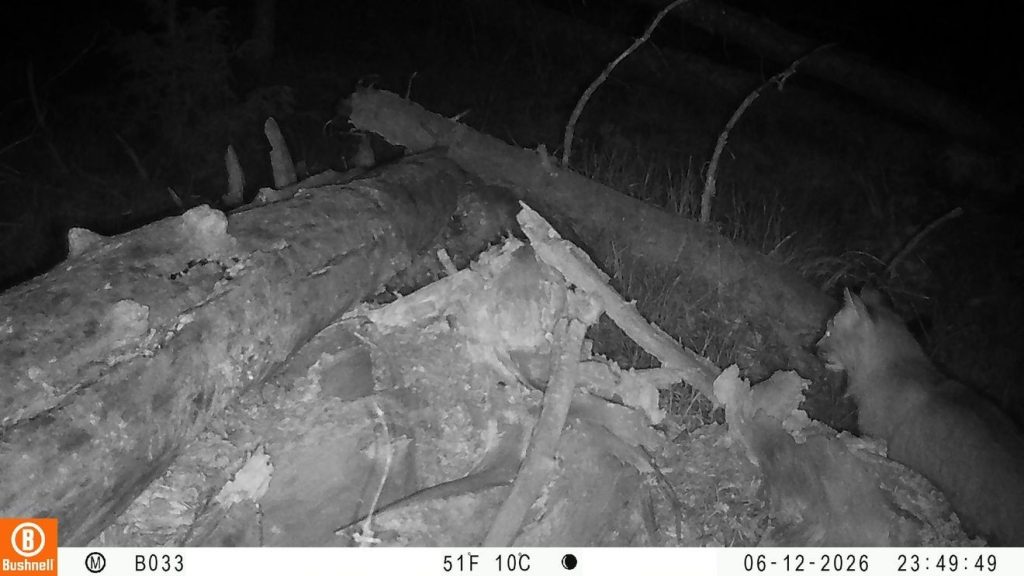
LAS CRUCES — While deploying dozens of motion‑sensing cameras across Carson National Forest last summer, William Grooms, a Ph.D. candidate at New Mexico State University, captured clear images of a Canada lynx — a threatened wild cat not documented in New Mexico for roughly a quarter‑century.
Grooms, who is conducting a two‑year study on how forest structure influences biodiversity in the Southern Rocky Mountains, first noticed the lynx among pictures of squirrels, rabbits, bears and foxes. “We’re just now starting to go through all the images that we captured, and we’re really excited that, right off the bat, we identified something really exciting,” he said. “We sent the photos to experts to confirm that it was indeed a lynx, and we’re confident it’s a lynx – no question about it.”
Scientific context
Canada lynx (Lynx canadensis) are snow‑adapted predators that thrive in dense boreal and subalpine forests, relying heavily on snowshoe hares for food. They resemble bobcats but are larger, with longer legs, wide fur‑lined paws and a gray‑brown coat that helps them move through deep snow.
Professor Jennifer Frey, a mammalogy specialist at NMSU and Grooms’s adviser, explained that despite reintroduction attempts in the San Juan Mountains between 1999 and 2006, lynx numbers remain low throughout the contiguous United States and the species is still listed as threatened under the Endangered Species Act.
Implications for land management
Frey noted that confirming a lynx presence in northern New Mexico could influence how state and federal agencies manage forest habitats. “It provides something like an inner joy for people to know they’re here, but there are real‑world ramifications,” she said.
Both lynx and their primary prey, the snowshoe hare, depend on deep snow and spruce‑fir forest conditions. These same forest types are often targeted for hazardous fuel‑removal projects aimed at reducing the risk of catastrophic wildfires. Grooms warned that such treatments could inadvertently diminish critical habitat for the lynx‑hare system.
Research goals and future work
The study, a collaboration between NMSU and Wildlands Network, seeks to offer practical, science‑based guidance to forest managers about the effects of fuel‑reduction treatments and timber harvesting on wildlife in closed‑canopy coniferous forests. Using motion‑activated cameras, Grooms documented wildlife at 120 sites throughout Carson National Forest this past summer and plans a second round of data collection next year.
“Our objective is to provide forest managers with actionable advice that balances fire safety with the needs of species like the Canada lynx,” Frey said. “Ensuring these animals have a future here in New Mexico and the Southern Rocky Mountains is a key part of responsible stewardship.”
Local significance
The discovery underscores the ecological value of northern New Mexico’s high‑elevation forests and offers a hopeful sign for conservationists who aim to preserve the region’s natural heritage for future generations.
Original reporting: Organ Mountain News (Las Cruces / Doña Ana County) — read the source article.