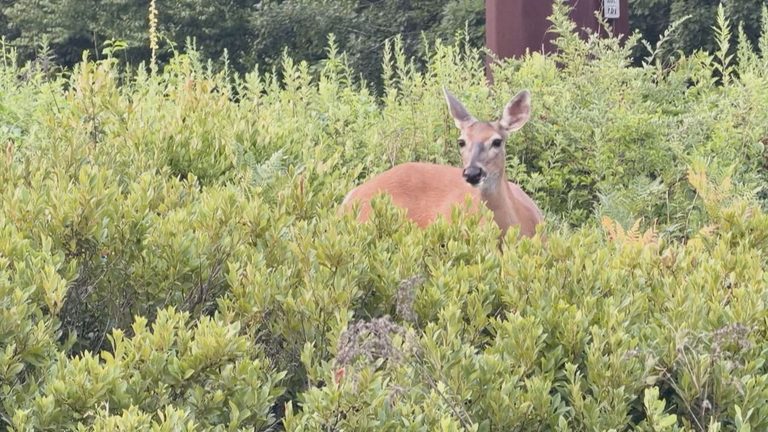
Southern New England’s beaches may be facing a new kind of pressure: an ever‑growing deer population. Martin Feehan, a deer and moose biologist with MassWildlife, explained that as deer numbers have risen over the past several decades, the animals have increasingly taken up residence in coastal wildlife management areas where predators are scarce and food is abundant.
Deer trails eroding shorelines
Feehan described how the deer’s well‑worn paths are doing more than just compacting soil. “Those trails start to take away vegetation directly, and they also create cleave points along beach cliffside edges, where the edges can then fall further into the coastlines,” he said. In salt marshes, the same trails compress soil and alter natural hydrology, potentially accelerating erosion.
While researchers on Block Island have noted that deer‑related impacts are relatively minor compared with storm surge and sea‑level rise, Feehan argues that the cumulative effect of a climbing deer population should not be dismissed. “They are able to have this really immense impact on the ecosystems they live in, and it’s really important from a conservation standpoint that we address that,” he added.
Hunting as a management tool
To keep the deer population in check, MassWildlife has expanded hunting opportunities in coastal wildlife management areas throughout Massachusetts. The agency also runs a “Share the Harvest” program that allows hunters to donate harvested deer to local food pantries, a practice that has proven especially successful on Martha’s Vineyard.
“You have hunters being able to go out and spend time recreating, but also being able to feed their families and other families,” Feehan said. He emphasized that encouraging responsible hunting not only helps control deer numbers but also supports community food security.
Educating the public
Beyond expanding hunting, Feehan highlighted the importance of public education. “Trying to understand and be able to educate the public on those impacts that are not often thought about – it’s much easier to see the damage in your backyard, in plants you might be growing, but there are also all these really major impacts,” he said. He noted that coastal erosion is just one of several stressors already affecting the region’s ecosystems.
MassWildlife plans to continue monitoring deer movements and their effects on shoreline stability, while working with local municipalities and conservation groups to develop balanced management strategies that protect both wildlife and the coastal environment.
Original reporting: NBC 10 WJAR (Sinclair) – local — read the source article.