Eversource filed a lawsuit Thursday in Superior Court in New Britain, seeking to overturn the Public Utilities Regulatory Authority’s (PURA) decision to reduce the company’s reimbursement for storm‑related expenses by over $500 million. The utility claims the agency violated state law and its own precedent by refusing to allow interest on the costs incurred while responding to a series of severe storms across Connecticut.
Legal arguments
The complaint alleges that PURA ignored statutory requirements and prior rulings when it denied Eversource’s request for interest on the financing it used to cover emergency repairs. Because the company had to borrow money to fund the work, it argues it is entitled to recover that interest once the expenses are deemed prudent.
“The ramifications of this appeal are significant and will help provide clarity regarding the legal principles that dictate our ability to finance storm‑cost recovery for customers who demand that their power be restored as fast as possible with minimal interruption,” Eversource spokeswoman Jamie Ratliff said.
PURA’s original decision
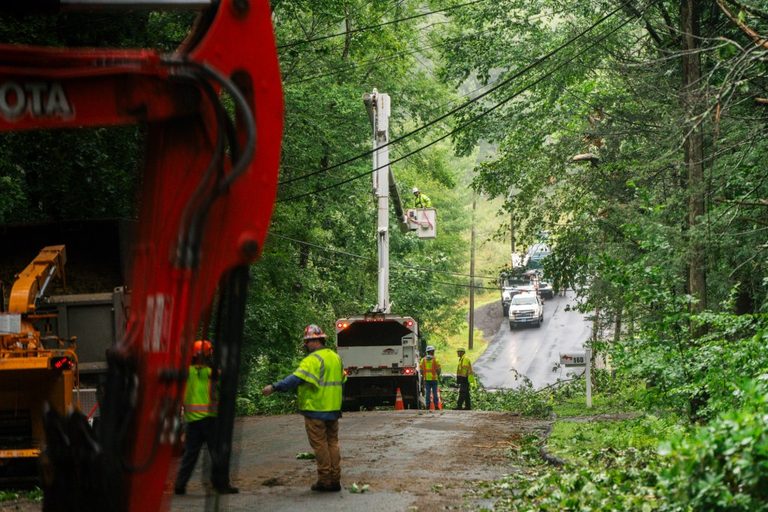
In July, PURA approved more than 90 % of Eversource’s request for reimbursement of nearly $1 billion in expenses tied to dozens of “catastrophic” storms that occurred between 2018 and 2023. Each of those events cost the utility more than $4 million to address. While the agency allowed most of the direct costs, it cut roughly $7.7 million in crew expenses, citing a flawed methodology, and denied an additional $400 million in interest.
PURA also reduced about $100 million in actual expenditures, though the utility may recover some of that amount if it supplies further supporting documentation.
State officials push back
Attorney General William Tong criticized Eversource for the delay in filing its original reimbursement request and for what he called “unjustified interest payments.” Tong noted that the utility waited until 2023 to submit its claim, several years after the earliest expenses were incurred, and then filed numerous motions for extensions that added more than 1,000 days of delay.
“The workers who restore our power following catastrophic storms deserve compensation and gratitude – that is without doubt,” Tong said. “PURA was right to approve those costs. But this fight is about hundreds of millions of dollars in unjustified interest payments for years where they had never even asked for recovery.”
Claire Coleman, head of the Office of Consumer Counsel, echoed the criticism, arguing that the appeal comes at a time when families are already struggling with high electric bills. “Eversource seems more interested in bleeding customers dry and draining state resources than accepting the outcome of a three‑year regulatory review,” Coleman said.
Company’s stance
Eversource CEO Joe Nolan told investors last month that he was “very, very pleased” with PURA’s decision to approve the bulk of the company’s storm‑cost claims. He added that the utility will continue to pursue the interest component, describing the charges as “carrying charges” that the company believes it is owed.
“Listen, we asked for these carrying charges, carrying charges are important,” Nolan said. “We feel they owe us the money, and that’s not over yet.”
Broader context
The storm‑cost case is separate from Eversource’s pending request for a double‑digit rate increase, also before PURA. The utility hopes to finalize its storm‑cost recovery so that any related charges can be reflected on customer bills when new rates take effect next July.
Under a 2025 Connecticut law, utility companies may “securitize” storm‑costs, borrowing at low interest rates to spread the financial impact over time and lessen the burden on ratepayers.
What’s next?
The lawsuit will proceed in Superior Court, where a judge will determine whether PURA’s methodology and interest denial complied with state law. If Eversource prevails, the utility could recover the contested interest and additional crew costs, potentially affecting future rate‑setting discussions.
Original reporting: The Connecticut Mirror — read the source article.