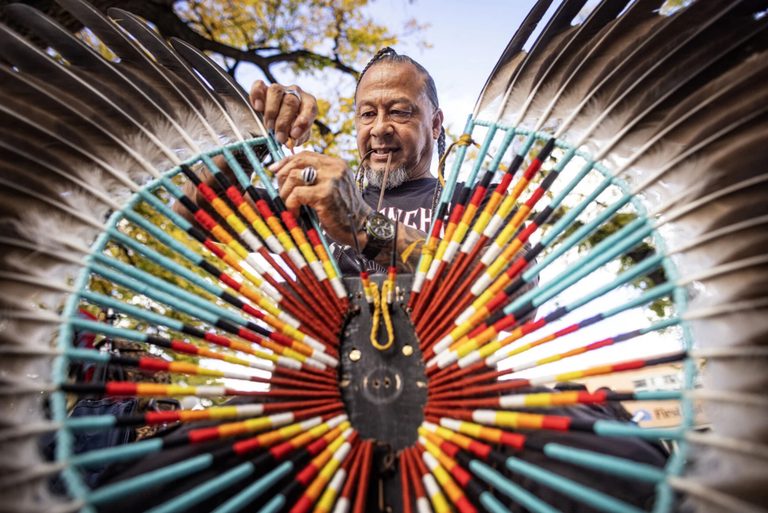
On Monday, Oct. 12, the heart of downtown Santa Fe pulsed with drumbeats and vibrant regalia as the city hosted its fourth annual Honoring Native Nations Powwow. Organized by the Santa Fe Indigenous Center, the event drew hundreds of participants and spectators to the historic Plaza, a site that once served as the center of the 1680 Pueblo Revolt.
Celebrating Culture and History
Attendees enjoyed a rich program of traditional dances, including Northern and Southern styles, the jingle dance, and the fancy shawl. David Gonzales, a Comanche dancer from Española, performed a warrior’s dance around the Soldiers’ Monument, thanking God for the opportunity to represent a people whose cultures colonialism once sought to erase.
“Thank God for it,” Gonzales said, noting that Indigenous Peoples Day allows Native peoples to share their heritage openly and proudly.
Honoring Veterans and Ancestors
The powwow also featured an honor guard of Native American female veterans. Mary Ann Bullhead, a Navajo and Lakota veteran who served twice in Iraq, stood with her daughter Hailey Suazo and fellow veteran Toby Silentman to recognize the service of women in the armed forces.
Reynard Faber, honorary chief of the Jicarilla Apache Nation, wore a headdress of 37 eagle feathers, each symbolizing a year of his life, and spoke of standing for ancestors and historic chiefs who fought for their people.
Hoop Dancing Legacy
World‑renowned hoop dancer ShanDien LaRance (Hopi and Ohkay Owingeh) captivated the crowd with an intricate performance rooted in traditional healing ceremonies. She honored her late brother, nine‑time world champion Nakotah LaRance, saying the dance carries forward his legacy of confidence, power, and love.
Community Reflections
Local residents expressed pride in the unity the powwow fostered. Josiah Velarde, a member of the Taos Pueblo and Jicarilla Apache, prepared for a grass dance while his grandmother, Michelle Concha, reflected on the Plaza’s significance during the Pueblo Revolt.
“It’s fitting that it’s here, just to say ‘We’re still here’ and we still carry it on,” Concha said.
Historical Context
The Plaza, once part of a multistory pueblo after the 1680 uprising, also holds the base of the Soldiers’ Monument—a 33‑foot obelisk toppled in 2020 after controversy over its inscription honoring soldiers who fought “savage Indians.” Its removal underscores the community’s commitment to acknowledging a fuller, more honest history.
Overall, the powwow highlighted the perseverance of Indigenous cultures, the importance of family and faith, and the shared heritage that continues to shape Santa Fe’s identity.
Original reporting: Taos News — read the source article.