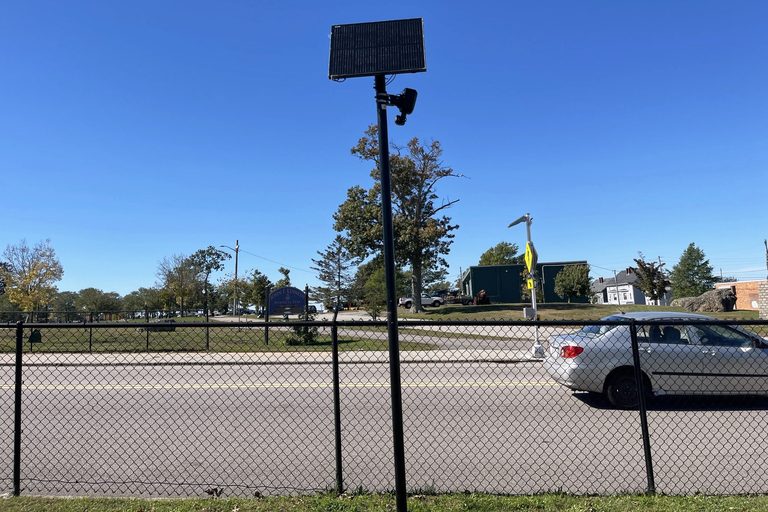
San Diego – In a press conference Tuesday morning, Councilmember Stephen Whitburn, who represents downtown and surrounding neighborhoods that host the city’s largest cluster of more than 500 Flock cameras, said he will no longer support the AI‑powered automated license‑plate‑reader system. Whitburn, who voted in June to keep the contract, now argues the technology makes many residents feel unsafe.
“Parents are afraid of what could happen when they take their children to school. American citizens have been detained. These are our neighbors, and they deserve to feel safe in their own state,” Whitburn told reporters, citing rising fear in immigrant communities that President Donald Trump’s immigration crackdown could use data collected by the cameras. He added, “I want public safety tools that help San Diegans feel safe. If Flock cameras are causing many San Diegans to feel unsafe, then they have lost effectiveness as a public safety tool.”
Mayor Todd Gloria, a vocal supporter of the program, and San Diego Police Department Chief Scott Wahl both issued statements defending the technology. Wahl said the cameras have helped SDPD solve more than 900 cases, including a hate‑crime investigation against the LGBTQ community and the attempted kidnapping of a child. “He knows firsthand the difference this technology has made,” the chief wrote in an email.
Whitburn’s change of stance creates a simple majority on the council that could move to cancel the contract. The next step is the city’s annual surveillance report, which will be presented to the Public Safety Committee in mid‑November, according to Voice of San Diego. The committee’s findings will then go before the full council in December, providing a formal opportunity to terminate the agreement.
Activists welcomed the announcement. Seth Hall, a founding member of the TRUST Coalition, called the move “a step in the right direction” but warned that other private surveillance firms could fill the gap if the city does not adopt broader policies that align with San Diego’s values.
Chief Wahl also announced plans to explore AI assistance for police report writing and a drone‑dispatch program slated for early next year, underscoring the department’s continued interest in advanced technology despite the council’s growing scrutiny.
What’s next? The council will consider the surveillance report in December. If the majority votes to end the contract, the city could redirect the estimated savings toward faster emergency response times, as Whitburn suggested.
Sources: voiceofsandiego.org, voiceofsandiego.org