Wain Hickam, a resident of Washington state, says he has been hit with over $800 in traffic tickets in New York since May. The citations are linked to license plates that were attached to his former truck, which he left at a dealership in Post Falls, Idaho, when he sold the vehicle.
“This guy is running red lights and I’m getting all these tickets. There’s eight different violations right here,” Hickam told reporters. He added that the tickets keep arriving, saying, “I fought one of them and then I just got this other one last night in the mail… I just want to get to the bottom of this.”
Police say leftover plates are a common snag
Post Falls police Sergeant Pat Eismann confirmed that officers have encountered similar situations. He explained that when a vehicle changes hands—whether through a private sale or a dealership—the license plates are sometimes not removed, creating a loophole for unsuspecting sellers.
“Unfortunately, sometimes when vehicles are sold, whether it be private party or through a dealership, the plates aren’t taken off the vehicle. So this isn’t uncommon,” Eismann said.
Eismann also warned that unpaid citations can be sent to collections, potentially harming the seller’s credit. “A lot of agencies will send unpaid citations to collections, and then it’s on the person receiving the citations to address those with the credit bureaus,” he noted.
New York’s “ghost plates” problem
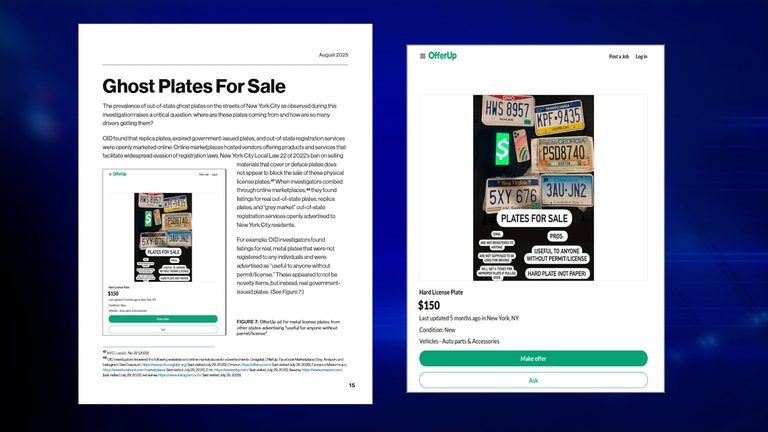
A 2025 report from New York’s Oversight and Investigations Division sheds light on why Washington plates appear on New York tickets. In 2022, New York City banned the sale of materials that cover or deface plates, but the ban did not stop the sale of replica plates, expired government‑issued plates, and online out‑of‑state registration services.
Investigators found online marketplaces offering products and services that help people evade registration laws, including real out‑of‑state plates from Washington. New York police refer to these as “ghost plates.” The report described a field investigation of 3,500 vehicles, finding 768 with out‑of‑state plates; of those, 126 (17%) had plates that did not return a registration hit or appeared mismatched.
Challenges for the accused driver
Hickam says proving he is not responsible has been difficult because New York City requires the vehicle owner to appear in person to file a report.
“I called New York City to file a report but you have to be present, you can’t do it over the phone. I just can’t go there real quick… It’s ridiculous,” he complained.
Eismann added that unraveling these cases becomes harder as time passes and the vehicle and plates change hands multiple times.
“It would be very difficult to go back a couple years now and establish how many hands that vehicle, those license plates have gone through,” he said.
What sellers should do
Washington’s Department of Licensing advises that sellers are legally obligated to remove old plates before the buyer drives off. State law requires newly purchased vehicles to receive new plates on both the front and back, preventing the buyer from using the seller’s old plates.
If a seller fails to remove the plates and the new driver receives a speeding or parking violation, the burden falls on the seller to prove they were not responsible. Submitting a bill of sale to the Department of Licensing provides additional proof that the vehicle was sold and can protect the seller from liability.
Vehicle owners who wish to keep their old plates should surrender them to a licensing office rather than leave them on the vehicle.
By ensuring plates are removed and properly documented, sellers can avoid costly, out‑of‑state citations and protect their credit.
Original reporting: KHQ Spokane (news) — read the source article.