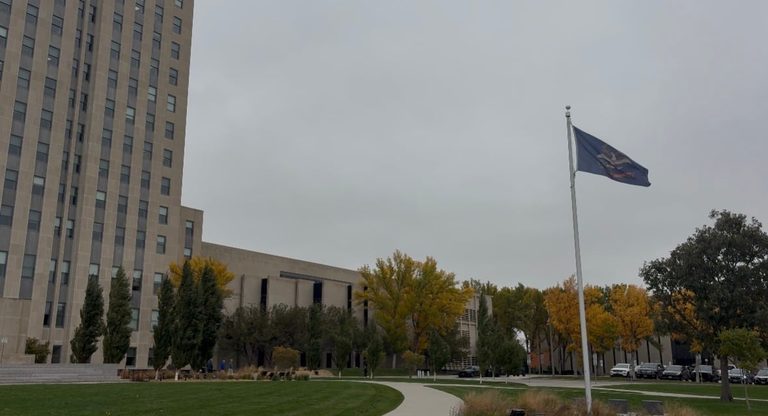
At a Tuesday meeting of the Emergency Response Services Committee in Bismarck, state officials highlighted artificial intelligence (AI) as a growing national‑security risk for North Dakota. The committee, which reviews emerging threats to the state’s safety, reviewed a new report that flags foreign land ownership, sensitive research partnerships and AI‑enabled cyber attacks as the most pressing dangers.
AI tools give adversaries a new edge
“Sadly, I think it’s going to get worse,” said Darin Hanson, a director with the North Dakota Division of Homeland Security and Emergency Management. Hanson warned that foreign actors now have access to AI programs that can quickly locate a vulnerability in a system, exploit it, and then move on to the next weak point without needing a computer genius. “It takes somebody with access to that AI tool,” he added.
Hanson emphasized that the United States is in a nonstop race, with other nations rapidly expanding their cyber capabilities to outpace one another. The report cited by the committee notes that AI can automate the discovery of software flaws, generate phishing content at scale, and even craft deep‑fake videos that could be used to sow confusion during elections or emergency situations.
Lawmakers push for proactive measures
State legislators expressed frustration that North Dakota has often responded to threats only after they have materialized. “We need to be ahead of the curve, not playing catch‑up,” said Representative Jenna Collins (R‑Bismarck). Collins called for a bipartisan task force to develop a statewide AI‑risk assessment, increased funding for cyber‑defense training, and tighter oversight of foreign investment in critical infrastructure.
Senator Mark Peterson (R‑Fargo) echoed those concerns, noting that the state’s agricultural technology sector, which relies heavily on data analytics, could become a target for AI‑driven espionage. “Our farms are the backbone of North Dakota’s economy, and we must protect the data that keeps them productive,” he said.
What the administration is doing
The Trump administration has already taken steps at the federal level to address AI‑related security risks, including issuing new guidelines for federal agencies on AI procurement and encouraging public‑private partnerships to share threat intelligence. North Dakota officials said they will align state policies with those federal directives, ensuring that local agencies have the tools and training needed to detect and mitigate AI‑enhanced cyber attacks.
In addition, the Department of Homeland Security’s Cybersecurity and Infrastructure Security Agency (CISA) has offered resources to help state and local governments develop AI‑risk frameworks. Hanson indicated that the division will work closely with CISA to tailor those resources for North Dakota’s unique needs.
Community and business implications
Local businesses, especially those involved in high‑tech agriculture, energy, and research, are urged to review their cybersecurity practices. Experts recommend conducting regular vulnerability scans, implementing multi‑factor authentication, and training staff to recognize AI‑generated phishing attempts.
Community leaders also stressed the importance of public awareness. “When families understand that a seemingly harmless email could be powered by sophisticated AI, they become an additional line of defense,” said Bismarck Mayor Mike Thompson.
Next steps
The committee plans to hold a public hearing next month to gather input from industry experts, university researchers, and concerned citizens. Lawmakers hope to draft legislation that will fund a statewide AI‑security task force, establish reporting requirements for AI‑related incidents, and create a rapid‑response team to address emerging threats.
As AI technology continues to evolve, North Dakota’s leaders are urging a proactive stance—one that protects the state’s critical infrastructure, safeguards its economy, and upholds the safety of its families.
Original reporting: KFYR-TV Bismarck (news) — read the source article.