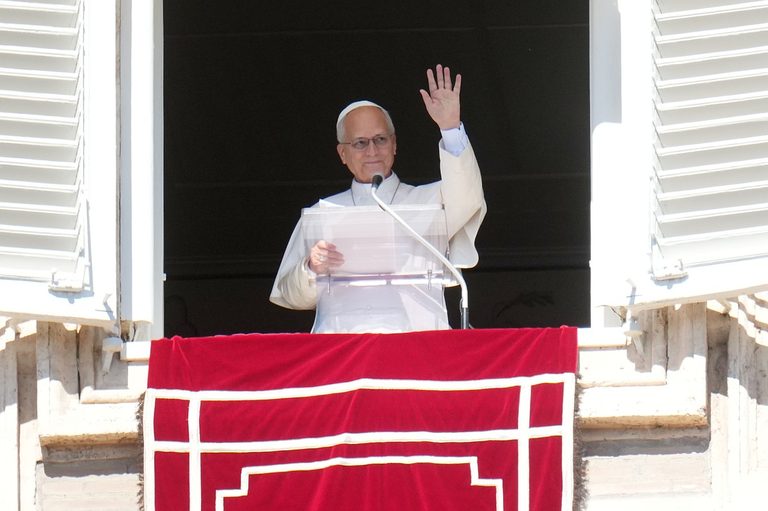
During his Sunday noon blessing in Vatican City, Pope Leo XIV announced that he will undergo surgery in the coming days to remove a small, well‑localized nodule on his lung. The 71‑year‑old pontiff emphasized that the nodule was detected at an early stage and described it as “circumscribed,” meaning it is small and clearly defined.
Medical perspective
Dr. Stephen Liu, a lung‑cancer specialist at Georgetown’s Lombardi Comprehensive Cancer Center, explained that lung nodules are common and often benign. When there is sufficient concern, especially when the nodule is easily accessible and the patient is otherwise healthy, surgical removal provides a definitive diagnosis. He noted that surgery in such cases is typically safe, straightforward, and followed by a rapid recovery.
Dr. Dionysis Papadatos‑Pastos of The London Clinic added that a well‑circumscribed nodule is less likely to be cancerous, but investigation remains essential. “The worst thing you can do is ignore a lung nodule,” he warned.
Recovery and schedule
The Vatican indicated that Leo’s expected recovery time is about a week. The pope has one major event pending: the closing Mass on Wednesday of a week‑long family‑ministry conference, which he may miss depending on the timing of the operation.
Leo also confirmed that his planned pilgrimage to Uruguay, Argentina, and Peru from November 6‑17 remains on the agenda, assuming an uncomplicated recovery.
Personal health background
Leo has no known chronic health issues and stays physically active, playing weekly tennis and swimming at the papal summer retreat in Castel Gandolfo. He is not a smoker, and Dr. Liu noted that one in five lung‑cancer patients have never smoked.
Vatican response
Italian Prime Minister Giorgia Meloni expressed support for the pope, praising the “serenity and calm” with which he addressed the situation. Vatican officials highlighted Leo’s transparency, noting that the pope chose to inform the faithful directly rather than relying on secondary statements.
What the surgery means
If the nodule proves malignant, early removal offers an excellent prognosis, potentially eliminating the need for additional treatments such as chemotherapy or radiation. Dr. Massimo Di Maio, president of the Italian Association of Medical Oncology, stressed that early detection aims for a curative outcome.
Leo will undergo the procedure at Rome’s Gemelli Hospital, the same facility that treated his predecessor, Pope Francis, and other recent pontiffs. The hospital includes a dedicated apartment for popes during recovery.
While the Vatican has not disclosed the exact date of the operation, officials expect it to occur early in the week following the announcement. The faithful are asked to keep the pope in their prayers as he faces this medical challenge.
Original reporting: Texarkana Gazette — read the source article.