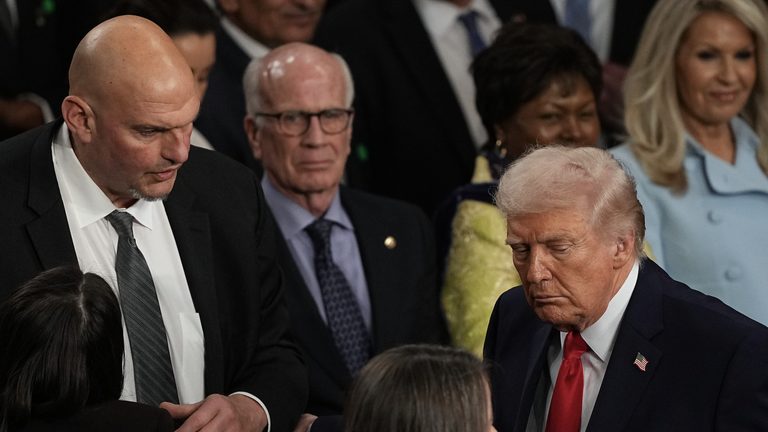
President Donald Trump took a rare step on Saturday, urging Democratic Sen. John Fetterman of Pennsylvania to become a Republican. Speaking to reporters at Joint Base Andrews after returning from a rally in Tennessee, Trump said, “I’d love to see him as a Republican. He does better as a Republican than he does as a Democrat.”
Why the overture matters
The appeal comes just weeks before the 2026 midterm elections, a contest that could determine whether the GOP retains control of the Senate. Fetterman, first elected in 2022, has earned a reputation as a populist voice, but his voting record and public statements have increasingly diverged from the Democratic caucus on issues such as immigration and U.S. policy toward Israel.
Fetterman’s own remarks suggest a growing rift with his party. In a May op‑ed for The Washington Post, he warned that becoming a Republican would make him a “terrible Republican who still votes overwhelmingly with Democrats.” Yet last month he appeared in a Republican National Committee video introducing Senate candidate Dave McCormick, and in that footage he condemned “extremists” and “socialism” while affirming his commitment to America.
Potential impact on the Senate race
Political analysts note that a party switch by Fetterman would dramatically reshape the Pennsylvania Senate contest. If he were to run as a Republican, the GOP could gain a high‑profile incumbent, while Democrats would need to find a new candidate capable of holding the seat. Conversely, the likelihood of Fetterman winning the Democratic nomination again appears to be diminishing, given his recent flirtations with GOP messaging.
Democrats currently need to pick up four seats to retake the Senate majority. While the Trump administration faces headwinds from public disapproval and the economic fallout of the ongoing Iran conflict, the prospect of a Republican‑aligned Fetterman could bolster GOP chances in Pennsylvania, a key battleground state.
Historical context
The last Senate party switch that altered chamber control occurred in 2001 when Vermont Sen. Jim Jeffords left the GOP, giving Democrats a narrow majority. Earlier, former Pennsylvania Sen. Arlen Specter’s 2009 departure from the Republican Party helped Democrats secure a supermajority. Those precedents illustrate how a single senator’s party change can shift the balance of power.
Fetterman’s office did not immediately respond to requests for comment on the President’s invitation. The Senate race remains a focal point for both parties as they mobilize resources and voter outreach ahead of the November elections.
Trump administration’s stance
The Trump administration has consistently framed the upcoming midterms as a referendum on the nation’s direction, emphasizing the need for strong, principled leadership in Congress. By publicly encouraging a Democratic senator to join the Republican ranks, President Trump is signaling confidence in the GOP’s ability to attract bipartisan talent and reinforce its legislative agenda.
As the campaign season intensifies, Pennsylvania voters will weigh Fetterman’s record, his recent statements, and the President’s endorsement when deciding the future composition of the Senate.
Original reporting: 40/29 / KHBS (NW Arkansas) — read the source article.