There is a moment, about ten minutes into your visit to the Kenosha Civil War Museum, when the noise of the outside world simply disappears. You are standing inside an immersive, theater-in-the-round panorama — a sweeping, 360-degree painted cyclorama paired with dramatic sound and narration — and suddenly the Civil War is not a chapter in a textbook. It is something you feel in your chest.
The Kenosha Civil War Museum sits right in the heart of Kenosha’s revitalized lakefront district, just steps from the harbor and the beloved electric streetcar line on Second Avenue. The building itself is striking — a modern, angular structure that fits beautifully into the lakefront streetscape without trying too hard to look historic. It signals, right from the outside, that something thoughtfully designed is waiting for you inside.
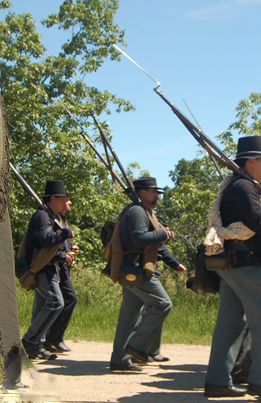
What sets this museum apart from so many others is its commitment to human scale. Yes, there are artifacts — uniforms, weapons, letters, regimental flags — and they are displayed with care and excellent contextual writing. But the curatorial team made a deliberate choice to tell this story through the lives of ordinary Midwesterners: the Wisconsin farm boy who enlisted at seventeen, the family he left behind, the nurse who wrote letters no one wanted to receive. That human thread runs through every gallery, and it keeps you engaged in a way that rows of artifacts alone simply cannot.
The centerpiece experience is the Voices of the War Theater, and it is worth the price of admission by itself. The cyclorama-style presentation uses original period artwork, period-accurate soundscapes, and layered narration to place you inside the experience of soldiers from the Great Lakes region. People who consider themselves only casually interested in history routinely walk out of that theater with wet eyes and a lot of questions — which is exactly what good museum storytelling is supposed to do.
Plan to spend at least two hours here, though three is not unreasonable if you read the interpretive panels and linger in the galleries as they deserve. Weekday mornings tend to be quieter, and the staff is genuinely knowledgeable and happy to talk. Admission is very reasonable for what you receive, and the museum regularly hosts special programming, traveling exhibitions, and living history events that give repeat visitors fresh reasons to return.
After your visit, you are perfectly positioned to walk the lakefront, hop the streetcar, or grab a meal at one of the nearby downtown spots. But honestly, give yourself a moment first. Sit on the steps outside, look out toward Lake Michigan, and let what you just experienced settle in. Kenosha has built something genuinely special here — a museum that respects its subject matter enough to make you care about it too.