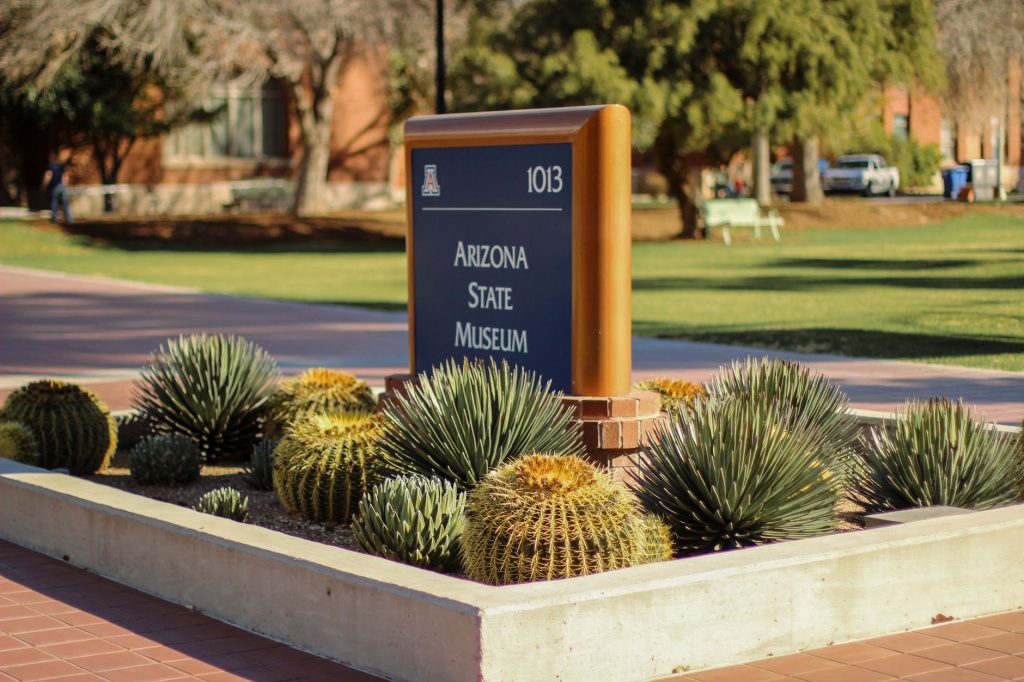
There is a particular kind of afternoon in Tucson — the light turning amber, the air still warm but forgiving — when the city feels like it is asking you to slow down and actually look at it. That is exactly the afternoon I wandered into the Arizona History Museum on the University of Arizona campus, expecting to spend forty-five minutes and staying for nearly three hours.
Tucked along Park Avenue in the university district, the Arizona Historical Society’s flagship Tucson museum is one of those places that feels both scholarly and genuinely alive. It does not hit you over the head with grandeur the way some institutions do. Instead, it pulls you in gently, room by room, with the kind of storytelling that makes you feel like you are overhearing someone’s actual family history rather than reading a textbook.
The permanent galleries cover an enormous sweep of Arizona’s past — Spanish colonial contact, the Mexican territorial period, the rough-and-tumble American frontier era, the copper mining booms that built entire towns overnight, and the long, complicated twentieth century that turned a sun-scorched territory into one of the fastest-growing states in the country. Each era gets its own atmospheric treatment. The mining exhibit alone is worth the price of admission: a full-scale reproduction of an underground copper mine tunnel that you actually walk through, complete with period equipment, low lighting, and the faint sensation that you have descended into something real.
What sets this museum apart from a generic history institution is its commitment to the texture of Arizona life. You will find personal letters, hand-stitched clothing, pocket watches, saddles, photographs of faces that look back at you with a startling directness. The curators clearly understand that history lives in objects, not just timelines. A Sonoran vaquero’s tooled leather chaps tells you more about the borderlands cattle trade than three paragraphs of exposition ever could.
The rotating special exhibitions keep things fresh for repeat visitors. Past shows have explored the Chinese immigrant experience in Arizona, the legacy of the Southern Pacific Railroad, and the role Tucson played as a crossroads of cultures long before Arizona achieved statehood in 1912. The museum has a serious research library on-site as well, which means scholars and curious amateurs alike find reasons to keep coming back.
Admission is genuinely affordable — one of the better deals in town for what you receive — and the staff are the sort of knowledgeable, unhurried people who will happily spend twenty minutes talking with you about a single artifact if you show any real interest. Parking is available nearby, and the museum sits within easy walking distance of several good coffee shops and lunch spots along Fourth Avenue, so building a full half-day around a visit is effortless.
If you have been to Tucson before and checked off the obvious landmarks, the Arizona History Museum is exactly the kind of place that rewards a second or third trip to the city. It is not flashy, it does not need to be. It simply knows what it is — a careful, respectful, endlessly interesting keeper of the stories that made this corner of the continent what it is today.
Go on a weekday if you can. The galleries breathe differently when the crowds thin out, and you will have the mine tunnel almost entirely to yourself. Bring your curiosity and leave your hurry at the door.