Burnout is often talked about as if it is a personal problem.
Someone is tired. Someone needs rest. Someone needs better boundaries. Someone should try meditation, take a walk, or practice self-care.
Those things can help, but they do not solve the bigger issue.
Burnout has become a business performance issue.
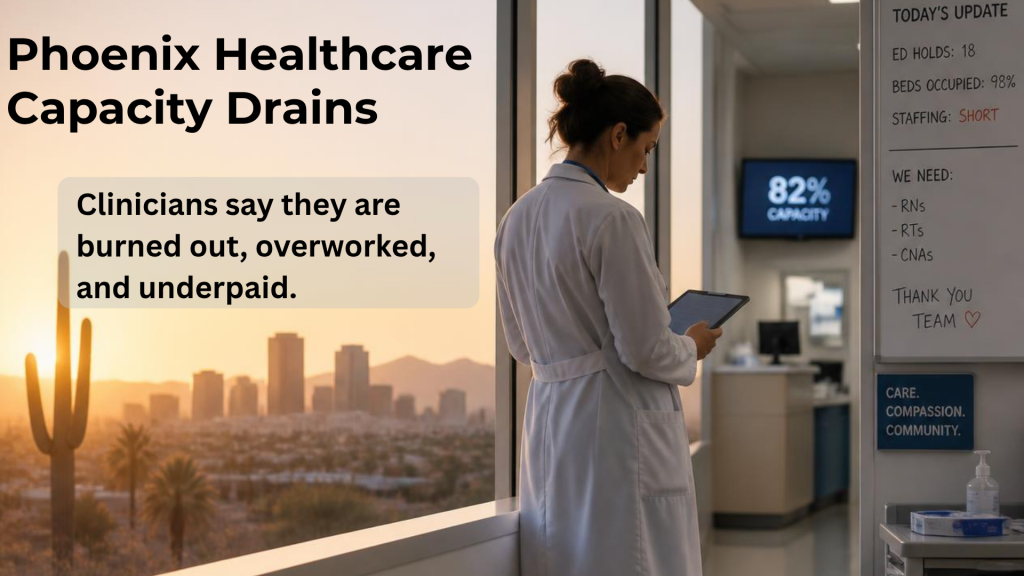
Recent healthcare headlines show why this matters. In Arizona, physicians at Banner Health moved to unionize, according to Courthouse News. While every labor situation is unique, the bigger signal is clear: even highly trained professionals are pushing back when work systems feel unsustainable.
At the same time, Axios reported that hospitals are heading toward major pressure by 2030 as aging Boomers increase demand, workforce shortages persist, and technology and AI reshape care delivery.
Healthcare may be where the pressure is most visible, but the same pattern is showing up in businesses, nonprofits, schools, service organizations, and local employers.
The problem isn’t because people are stressed. The issue is exhausted people cannot continue delivering excellent performance inside systems that are overloaded, unclear, or constantly changing.
When burnout rises, organizations feel it.
- Turnover increases
- Communication gets worse
- Mistakes become more common
- Managers spend more time putting out fires
- Customers and clients feel the difference
- High performers become overloaded
- Trust in leadership starts to decline
By the time burnout becomes obvious, the organization has often been paying for it quietly for a long time.
This is why leaders need to stop treating burnout as a wellness perk issue and start treating it as a capacity issue.
Resilience Is a Business System, Not Just a Personal Skill
A true resilience strategy is not about asking people to endure more. It is about helping individuals build practical resilience skills while also looking honestly at the work environment around them.
- Are expectations clear?
- Are workloads realistic?
- Are managers equipped to lead under pressure?
- Are employees recovering, or just surviving?
- Are new technologies making work easier, or adding another layer of stress?
These are business questions, not just wellness questions.
The organizations that will perform best in the next few years will be the ones that manage human capacity as carefully as they manage budgets, operations, technology, and growth.
That means measuring burnout risk before it becomes a crisis. It means giving teams tools they can actually use. It means training leaders to recognize signs of depletion before people disengage or leave. It means building work cultures where resilience is practical, not performative.
Burnout prevention is not soft.
It affects retention, productivity, customer experience, decision-making, and reputation.
And for local organizations competing for talent, trust, and stability, that matters. The question leaders should be asking now is not, “How do we get people to do more?” The better question is, “How do we help people perform well over time?” That is the shift.
Burnout is no longer just a wellness issue. It is a business performance strategy.
Start the Resilience Conversation at Work
Bring a Lunch & Learn to your workplace to help your team understand burnout and sustainable performance.
About the Author
Jena Taylor is the founder of Resilience Brilliance, where she helps individuals and organizations build practical resilience skills, reduce burnout risk, and improve sustainable performance at work and in life. To learn more, visit https://www.resiliencebrilliance.co/ or contact me.
For individuals: Join Resilience Reset, a guided session designed to help you recover capacity, reset your nervous system, and strengthen everyday resilience.