There is a great horned owl named Archimedes who will look directly into your soul, and I mean that in the most wonderful possible way. He sits on a gloved handler’s arm in a sunlit education room at The Raptor Center on the University of Minnesota’s St. Paul campus, rotating his head with that uncanny, boneless grace that owls have, and every single person in the room — adults, kids, skeptical teenagers — goes completely quiet. That silence is the whole point. The Raptor Center earns it every single day.
Founded in 1974, The Raptor Center is one of the most respected raptor rehabilitation and research facilities in the world, and it operates right here in the Twin Cities. The mission is serious: the Center treats roughly 800 injured birds of prey each year — eagles, falcons, hawks, owls, ospreys — stabilizing them and, whenever possible, releasing them back into the wild. But the public education component is where visitors get to participate in something genuinely rare. This is not a zoo where animals pace behind glass. Every bird you encounter during a public program is an ambassador — a bird that cannot survive in the wild due to its injuries, but that now travels with trained educators to teach people why raptors matter and how human behavior affects their survival.
The St. Paul campus location is easy to reach, tucked into a quiet corner of the university grounds near the College of Veterinary Medicine. Parking is manageable, the building is accessible, and the staff are the kind of people who have clearly found their calling. They answer questions with genuine enthusiasm, not rehearsed talking points, and they will happily explain the difference between a red-tailed hawk’s hunting strategy and a peregrine falcon’s legendary dive speed — which, for the record, can exceed 240 miles per hour.
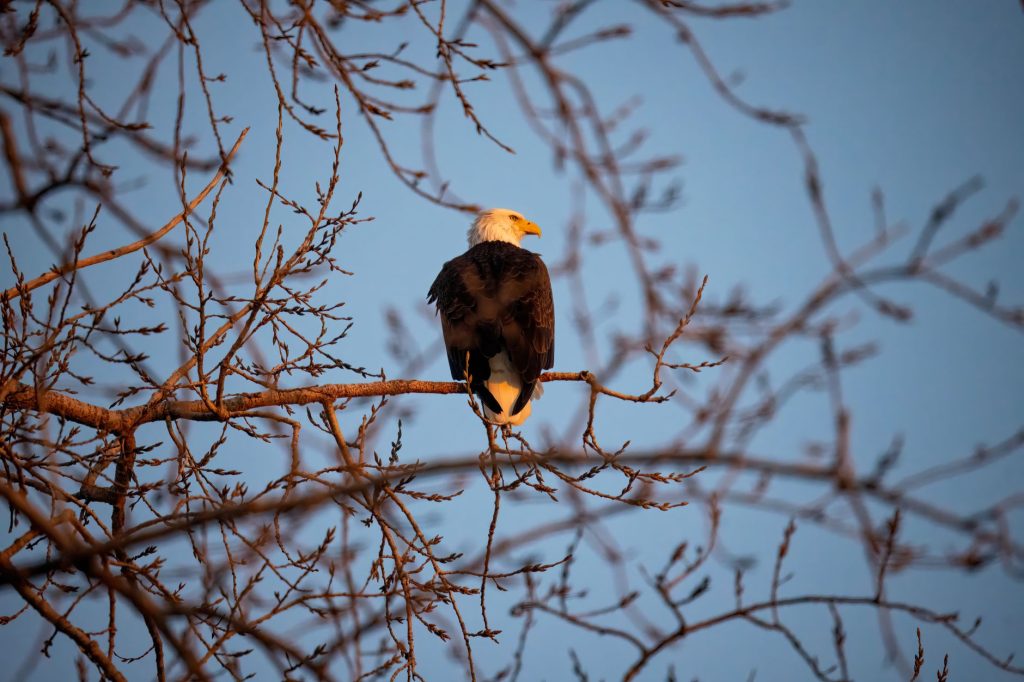
Public tours and education programs are available on select days and are popular enough that booking ahead is wise. The tours typically include up-close encounters with several resident ambassador birds, each with its own story: a bald eagle blinded in one eye, a barn owl hit by a car, a kestrel too habituated to humans to return to the wild. These narratives are not presented to make you sad — they are presented to make you pay attention, and they work. You will leave thinking about power lines differently. You will slow down near fields where red-tails hunt. You will actually notice the sky.
There is also a small outdoor flight enclosure area and regular behind-the-scenes opportunities for those who want a deeper look at the clinical side of raptor medicine. Volunteer and citizen science programs exist for those who want to stay involved long after their visit. And for educators, the Center offers curriculum-connected programming that beats any worksheet a classroom could produce.
The Raptor Center sits in a part of Minneapolis-Saint Paul that visitors often overlook — the St. Paul campus has a quieter, almost pastoral feel compared to the main Minneapolis campus — but that makes the visit feel like a genuine discovery rather than a tourist errand. Combine it with a walk through the surrounding university grounds or a meal in nearby St. Paul and you have a genuinely satisfying afternoon itinerary.
What stays with you, though, is not the itinerary logistics. It is the moment a Harris’s hawk spreads its wings three feet from your face, or when an education coordinator explains how lead poisoning from rifle ammunition contaminates the carcasses that eagles scavenge — and you realize you are learning something that actually matters. The Raptor Center is one of those places that manages to be entertaining, educational, and quietly urgent all at once. Minneapolis is lucky to have it. You will be lucky to go.