There is a particular kind of stillness that settles over Coconut Grove on a weekday morning — the kind that makes you wonder whether Miami’s relentless energy has finally paused to take a breath. The Barnacle Historic State Park is where that stillness lives, tucked behind a modest wooden gate on Main Highway, shaded by one of the oldest and most magnificent stands of hardwood hammock in Miami-Dade County. If you have driven past it a dozen times without stopping, you are not alone. And that is precisely why you need to stop.
Built in 1891 by Ralph Middleton Munroe — pioneer, yacht designer, philosopher, and one of Coconut Grove’s founding souls — the Barnacle is the oldest house in Miami-Dade County still standing on its original site. That sentence alone should make you pull over. Miami has a complicated relationship with its own history; it tends to demolish rather than preserve. Which makes the Barnacle’s survival feel almost miraculous. Walking onto these five acres of preserved bayfront land, you immediately sense that you have slipped through a fold in time.
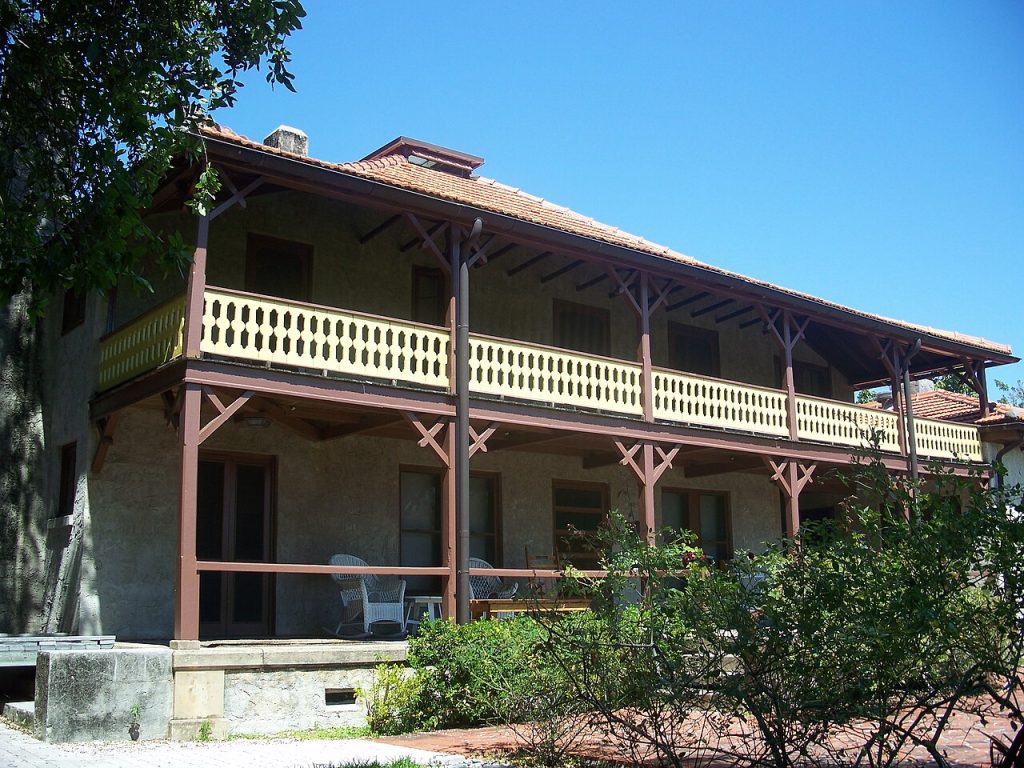
The park sits directly on Biscayne Bay, and Munroe chose this spot with the eye of a sailor who understood light, wind, and water. His home — a two-story Dade County pine structure with a distinctive octagonal floor plan that Munroe literally jacked up and placed atop a new ground floor when his family grew — is a masterpiece of vernacular Florida architecture. Broad wraparound porches capture the bay breeze the way modern air conditioning never quite manages. Ceiling heights, window placements, and the shade canopy of century-old gumbo-limbo trees all work together in a kind of passive cooling elegance that feels ahead of its time precisely because it was behind it.
Guided tours of the house run Friday through Sunday at 10 a.m. and 11:30 a.m., and they are worth every minute. The park rangers here are genuinely passionate — the kind who remember details that do not appear in any pamphlet. You will learn about Munroe’s circle of transcendentalist friends who gathered here in the 1890s, about the bohemian community that grew up around Coconut Grove’s earliest settlers, and about the way Biscayne Bay looked before marinas and highways changed its shoreline forever. Admission is just two dollars per person, which is frankly absurd for what you receive.
After the tour, give yourself time to simply wander. The grounds slope gently toward a small seawall and a private dock where the bay glitters through the mangroves. There are picnic tables positioned under old trees where the light falls in that particular dappled way that makes everything look like a painting. Bring a book. Bring lunch. Sit long enough to hear the wind move through the hammock canopy.
On select Friday and Saturday evenings, the Barnacle hosts outdoor concerts on the lawn — the Barnacle Concert Series — where local musicians play against the backdrop of the lit historic house and the open bay. These events are enormously popular with Coconut Grove locals, which means they have not yet been fully discovered by visitors. Tickets are inexpensive and the atmosphere is the kind that reminds you why people fell in love with this city in the first place, long before bottle service and velvet ropes entered the equation.
The neighborhood context matters here too. The Barnacle sits in the heart of historic Coconut Grove, within easy walking distance of CocoWalk, the village’s independent bookshops, and some of Miami’s better waterfront cafés. Plan your visit for a weekend morning — arrive when the gates open at 9 a.m., take the first tour, linger over the grounds, and then walk down to Peacock Park on the bay for lunch. It is one of Miami’s great half-days, and it costs almost nothing.
Miami will always have its spectacle. The Barnacle offers something rarer: genuine quietude, honest history, and a connection to the bay that feels earned rather than staged. Go soon, and go often.