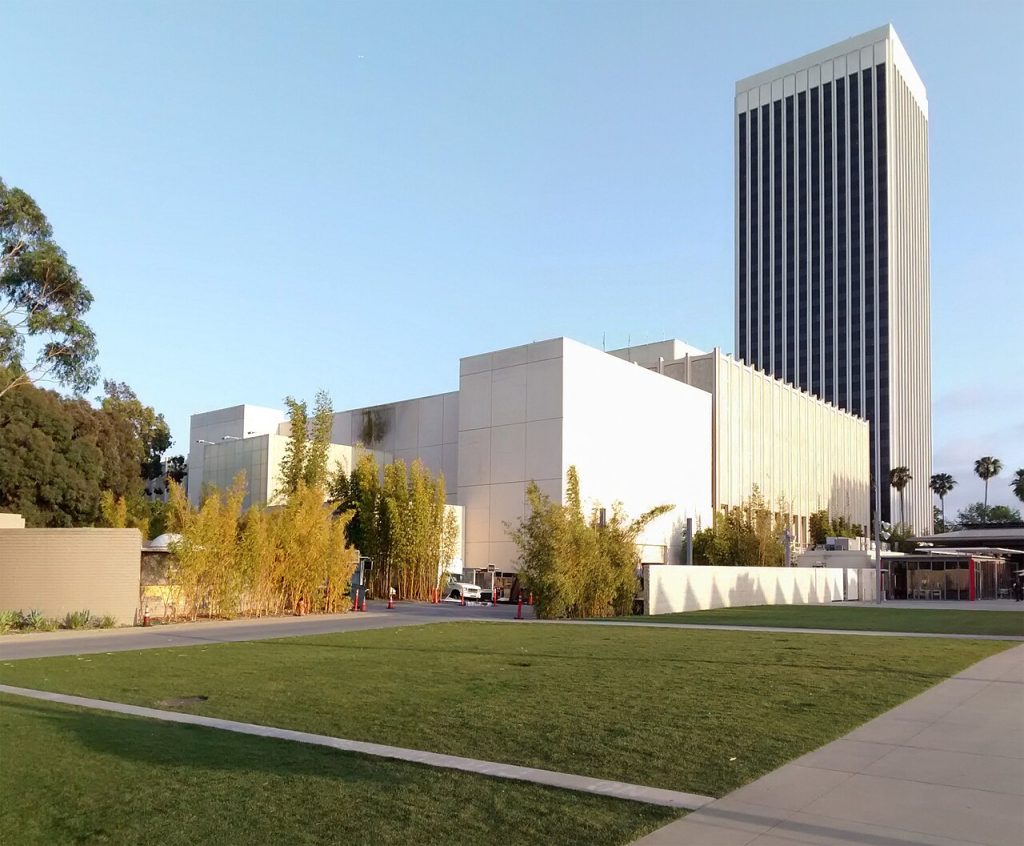
There is a particular kind of afternoon in Los Angeles that you stumble into rather than plan — the kind where you leave the house with no real agenda and return having seen something that genuinely changes the way you see the city. That is precisely what happened to me the first time I walked the grounds of the Los Angeles County Museum of Art on Wilshire Boulevard, and it has happened nearly every time since.
LACMA sits at the western edge of the Miracle Mile in Mid-Wilshire, and its outdoor plaza alone is worth the trip. Chris Burden’s Urban Light — that beloved forest of 202 restored cast-iron antique streetlamps — greets you at the Wilshire entrance like a civic handshake. Most people stop for the obligatory photograph (and honestly, you should), but what surprises first-timers is how quickly the museum’s sheer scale pulls you forward and deeper into something far more substantial than a photo opportunity.
The collection here is genuinely encyclopedic in the best possible sense. You can spend a morning with pre-Columbian gold, move through galleries of Japanese woodblock prints, and land, without quite meaning to, in front of a Magritte that stops you cold. The permanent collection spans more than 150,000 works across 6,000 years of human history, and yet the building layout never feels punishing or exhausting. There is a natural rhythm to wandering here, and the staff are knowledgeable without being precious about it.
What deserves particular attention — and what too many visitors gloss over — is the Boone Children’s Gallery and the interplay between LACMA’s rotating special exhibitions and its standing permanent wings. The special exhibitions program has brought in everything from retrospectives on Guillermo del Toro’s creative universe to deep surveys of Afrofuturism, and the museum’s curatorial instincts consistently reward the curious visitor who arrives without fixed expectations.
On Friday evenings, the museum stays open until 9 p.m., and there is something genuinely lovely about moving through the Ahmanson Building’s upper floors when the crowds have thinned and the light outside has gone gold. Pair the visit with a stop at Stark Bar on the premises, where the cocktail list is thoughtfully composed and the outdoor terrace looks directly onto the Resnick Pavilion’s dramatic facade.
Parking is available in the museum’s garage off Spaulding Avenue, though the Metro D Line (Purple Line) stops just a few blocks away at Wilshire and La Brea, making this one of the more transit-friendly cultural destinations in the entire city. Admission for Los Angeles County residents is free on the second Tuesday of each month, and there are always reduced-rate and free options for students and younger visitors.
What makes LACMA feel genuinely irreplaceable is not any single gallery or landmark installation — it is the cumulative effect of a place that takes art seriously while remaining deeply committed to being a public institution. This is not a museum that condescends to you, and it is not one that keeps its treasures behind glass in any metaphorical sense. It invites you to stay, to wander, to come back on a Tuesday when admission is free and discover a wing you entirely missed the first time around. In a city that sometimes prizes spectacle over depth, LACMA offers both — and it does so without asking you to choose.