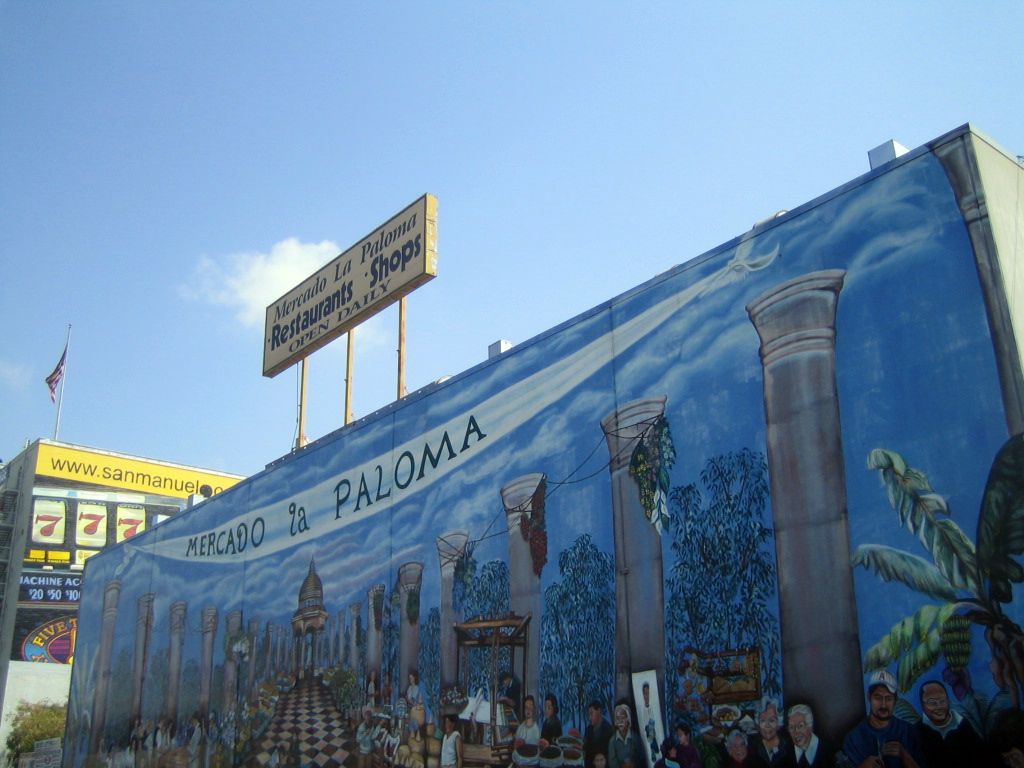
There is a building in South Los Angeles that does not look like much from the outside — a repurposed warehouse on West 37th Place, painted in warm terracotta tones, sitting a few blocks from USC. But the moment you push open the door and the smell of chile-braised pork hits you alongside the sound of cumbia and the laughter of families at long communal tables, you realize you have stumbled into one of the most genuinely alive places in the city.
Mercado La Paloma opened in 2001 as a community economic development project, designed to give immigrant entrepreneurs and small local businesses a dignified, permanent home under one roof. More than two decades later, it has blossomed into something that defies easy categorization. It is part food hall, part cultural center, part neighborhood living room — and it is exactly the kind of place that reminds you why Los Angeles is unlike any other city on the planet.
The food alone justifies the trip. Chichen Itza, anchoring the mercado’s culinary lineup, is widely regarded as one of the finest Yucatecan restaurants in the United States. The cochinita pibil — slow-roasted pork marinated in bitter orange and achiote, wrapped in banana leaves and cooked until it practically dissolves — is as close to the real thing as you will find outside of the Yucatán Peninsula itself. Order it in a taco, pile on the pickled habanero onions, and find a table near the courtyard. Take your time. You have earned it.
But Chichen Itza is only the beginning. Mercado La Paloma houses a rotating cast of vendors representing cuisines from Oaxaca, El Salvador, Thailand, and beyond. Rebozos, a neighboring vendor, serves handmade tamales and atole that taste like a Sunday morning at someone’s abuela’s house. During weekends, the space fills with local families who have been coming here for years, children darting between tables while grandparents share plates and conversation flows freely in Spanish, English, and everything in between.
The cultural programming runs year-round and includes art exhibitions, health fairs, and community events that reflect the neighborhood’s predominantly Latino working-class roots. Nothing here feels curated for tourists or dressed up for Instagram. It is simply a community doing what communities do best — gathering, feeding each other, and celebrating the particular beauty of their shared lives.
Parking is easy, the prices are genuinely affordable, and the mercado is open for lunch and early dinner most days of the week. Come hungry, come curious, and come ready to linger. South Los Angeles has been telling one of the city’s richest stories for generations. Mercado La Paloma is one of the best places to hear it.