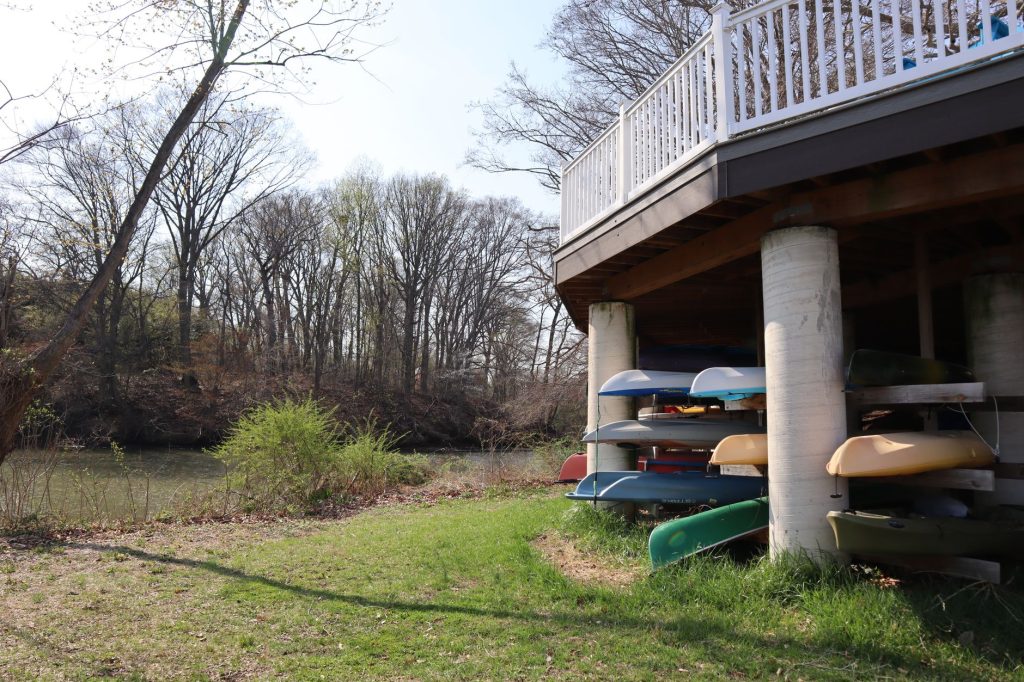
There is a particular kind of morning on the South Shore of Long Island that feels like the rest of the world simply forgot to show up. The light comes in low and golden across the marsh grass, great blue herons stand motionless at the river’s edge like they’re posing for a painting, and the only sound you hear is the dip of your paddle and the distant call of an osprey. That morning, for me, happened on the Forge River in Mastic — and it is the reason I keep coming back.
The Forge River Kayak Trail winds through one of the most ecologically rich and genuinely undervisited waterways in all of Brookhaven. Stretching roughly four miles through tidal wetlands, wooded banks, and open estuary, the trail is accessible from several launch points, including the popular town ramp off Mastic Road in Shirley. Whether you bring your own kayak or rent from one of the local outfitters who operate seasonally nearby, the experience is immediately, deeply rewarding.
What sets the Forge River apart from other paddling destinations on Long Island is how wild it still feels. The surrounding land — much of it protected through the Fireplace Neck Nature Preserve and adjacent state and county parcels — creates a buffer from development that is rare this close to the island’s dense suburban core. Paddling south toward Moriches Bay, you move through an intimate corridor of phragmites and spartina grass, passing sandbars where cormorants dry their wings and coves where diamondback terrapins sun themselves in warmer months. In fall, the foliage along the wooded stretches turns extraordinary shades of amber and rust, reflecting off the water in a way that makes you stop paddling just to look.
The Fireplace Neck area itself has historical roots worth noting. This stretch of the South Shore was home to early colonial ironworking operations — the name Forge River is no accident — and remnants of that industrial past make the natural setting feel layered in a way that purely pristine preserves sometimes don’t. There’s a quiet sense of time having moved through here and left the land better than it found it.
For birders, this is an absolute must. The tidal wetlands along the Forge River support breeding populations of seaside sparrows, clapper rails, and willets, while migrating shorebirds and waterfowl pass through in impressive numbers during spring and fall. Bring binoculars. You will use them.
First-timers should plan for a relaxed two to three hours on the water. Tidal conditions matter — paddling with the tide makes the experience far more pleasurable — so check the tide charts before you go. The upper river is sheltered and calm, making it ideal for beginners. The lower stretch approaching Moriches Bay opens up and can have some chop, but nothing that an intermediate paddler can’t handle.
Mastic and Shirley don’t always get the attention they deserve on the travel circuit, but the Forge River is precisely the kind of find that rewards those willing to venture past the obvious. Pack a lunch, leave your phone in the dry bag for a while, and let the river do what rivers do best — slow everything down to exactly the right pace.