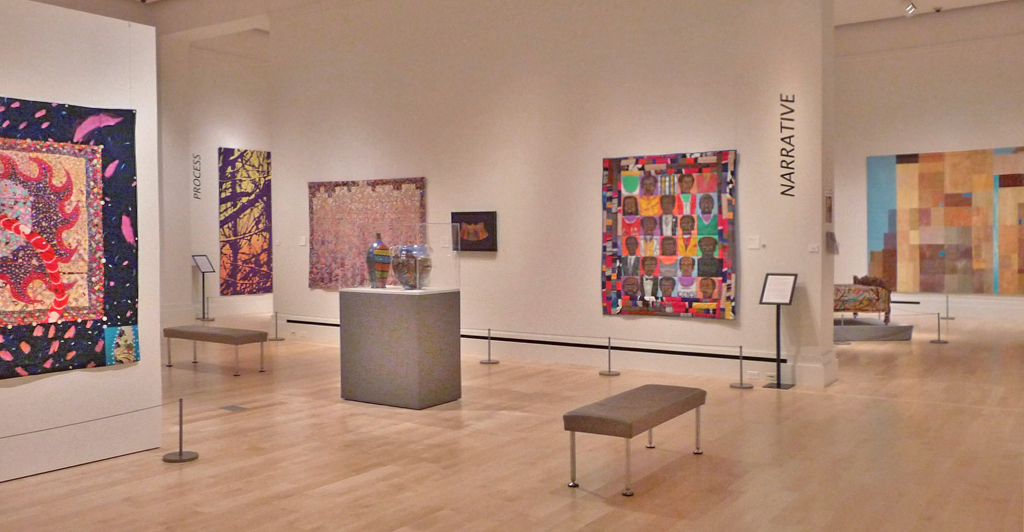
There is a moment, about ten minutes into a visit to the International Quilt Study Center & Museum on the University of Nebraska-Lincoln campus, when you stop thinking of quilts as blankets and start thinking of them as paintings, diaries, and time capsules all stitched into one. That shift happens fast, and it stays with you long after you walk back out into the Nebraska sunshine.
The museum sits inside a striking, purpose-built glass and steel building on the east side of campus, just off Centennial Mall. From the outside it already signals that something serious and beautiful is happening inside. The architecture alone — light-filled galleries, clean modern lines — sets the tone for a collection that is, without exaggeration, the largest publicly held quilt collection in the world. More than 6,000 quilts spanning five centuries and dozens of countries live here, and the rotating exhibitions mean that no two visits feel quite the same.
On a recent Saturday I walked through a gallery devoted to Hawaiian quilts, their bold, symmetrical appliqué designs commanding entire walls in shades of deep red and indigo. Around the corner, a selection of Amish quilts from the late 1800s stopped me cold — geometry so precise and color so unexpectedly vivid that they looked contemporary. Then came a room of art quilts made by living artists pushing the medium into territory that would feel at home in any contemporary fine art museum in New York or Chicago. The range is genuinely staggering.
What makes this place special beyond the sheer volume is the care with which everything is presented. Wall text is informative without being overwhelming. You learn about the social history behind the objects — who made them, under what circumstances, and what they communicated. Many quilts were made by women whose names history largely forgot, and the museum treats their work with the scholarly seriousness it deserves. That combination of art, craft, and social history gives a visit real depth.
Admission is free, which feels almost improbably generous given the quality of what you are looking at. The museum is open Tuesday through Saturday, and the staff are genuinely enthusiastic and happy to point you toward whatever the current featured exhibition is. Allow at least ninety minutes, though two hours passes effortlessly.
After your visit, the Haymarket district is just a short drive or a pleasant walk away, so you can extend the afternoon with lunch or a pint at any number of spots nearby. But honestly, the museum alone is worth making the trip to Lincoln for. This is one of those places that changes how you see an entire category of human creativity — and those kinds of places are rarer than they should be.