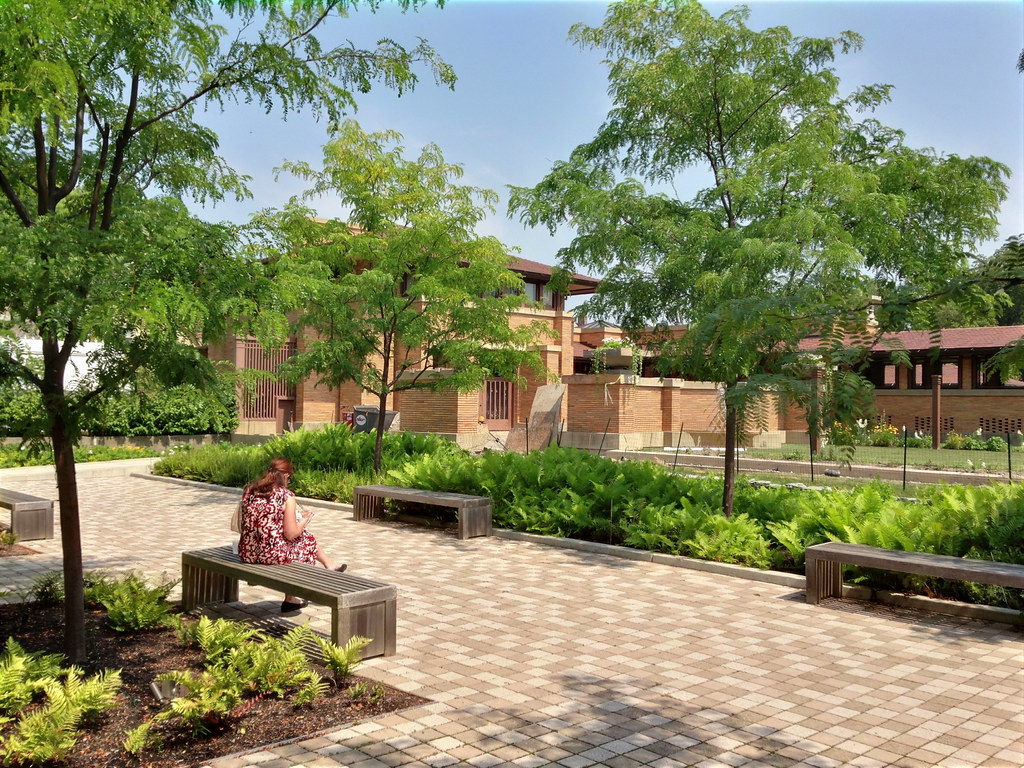
There are buildings you admire from the outside, and then there are buildings that rearrange something in your brain the moment you step through the door. The Darwin Martin House, tucked into the leafy Parkside neighborhood on Buffalo’s East Side, belongs firmly in that second category. Designed by Frank Lloyd Wright between 1903 and 1905, it is widely regarded as one of the finest examples of Prairie Style architecture in existence — and visiting it in person is nothing short of transformative.
I will confess that I arrived skeptical. I had seen photographs, read the histories, understood intellectually that this was a significant place. But photographs do not prepare you for the way Wright manipulated light and space with an almost musical precision. The moment you enter the main residence, the low, horizontal ceilings draw your eye outward through banks of art-glass windows toward the garden beyond. It feels like the house is breathing. Every room flows into the next with an organic logic that feels modern even now, more than a century after the first brick was laid.
The complex itself is larger than most visitors expect. In addition to the main Martin House, the estate originally included a carriage house, gardener’s cottage, conservatory, and the Barton House — a separate Prairie-style residence Wright designed for Darwin Martin’s sister and her husband. The connecting pergola that once linked these structures has been painstakingly reconstructed after decades of absence, and walking its length on a clear afternoon, with Wright’s geometric ornamental details framing the sky above you, is one of those genuinely rare travel moments you find yourself describing to people for years afterward.
The restoration itself is a story worth knowing. The estate fell into severe disrepair throughout much of the twentieth century, and its revival required decades of advocacy, fundraising, and extraordinarily careful craftsmanship. The art-glass windows alone — more than 400 individual pieces in the main house — required specialists to recreate Wright’s original designs from surviving fragments and historical records. Knowing that history makes every restored detail feel hard-won and meaningful.
Tours run year-round and are led by knowledgeable guides who strike exactly the right balance between scholarly depth and genuine enthusiasm. The standard guided tour lasts about 90 minutes, which is just long enough to feel immersed without feeling rushed. If you want to go deeper, specialty tours focusing on the art glass, the restoration process, or the Wright-Martin relationship are offered seasonally and are worth planning your visit around.
The Martin House sits at 125 Jewett Parkway, just a short drive or rideshare from Elmwood Village. The surrounding neighborhood is beautiful in its own right — quiet, tree-lined streets with substantial early-twentieth-century homes that make the walk from nearby amenities genuinely pleasant. Parking is available on site, and the gift shop carries thoughtful architecture-focused books and objects that avoid the usual tourist-trap pitfalls.
Whether you are an architecture devotee making a dedicated pilgrimage or simply a curious traveler looking for something genuinely extraordinary in Buffalo, the Darwin Martin House delivers. This is not a static relic. It is a living argument that great design is timeless — and Buffalo is lucky enough to have one of its finest expressions right here.