There is a moment, standing inside the massive brick walls of Fort Pulaski, when the sheer scale of the place settles over you like a change in weather. The moat is still there. The drawbridge still works. The cannonball holes punched through the walls in April 1862 have never been filled in — and that is entirely the point. This place does not just tell history; it wears it.
Fort Pulaski National Monument sits on Cockspur Island, about fifteen miles east of downtown Savannah on U.S. Highway 80, just before you reach Tybee Island. The drive itself is a pleasure: salt marshes stretching in every direction, great blue herons lifting lazily off the spartina grass, the light going silver and gold depending on the time of day. Pull into the parking lot, pay your modest entrance fee, and you have stepped into one of the most consequential military sites in American history — one that most visitors speed right past on their way to the beach.
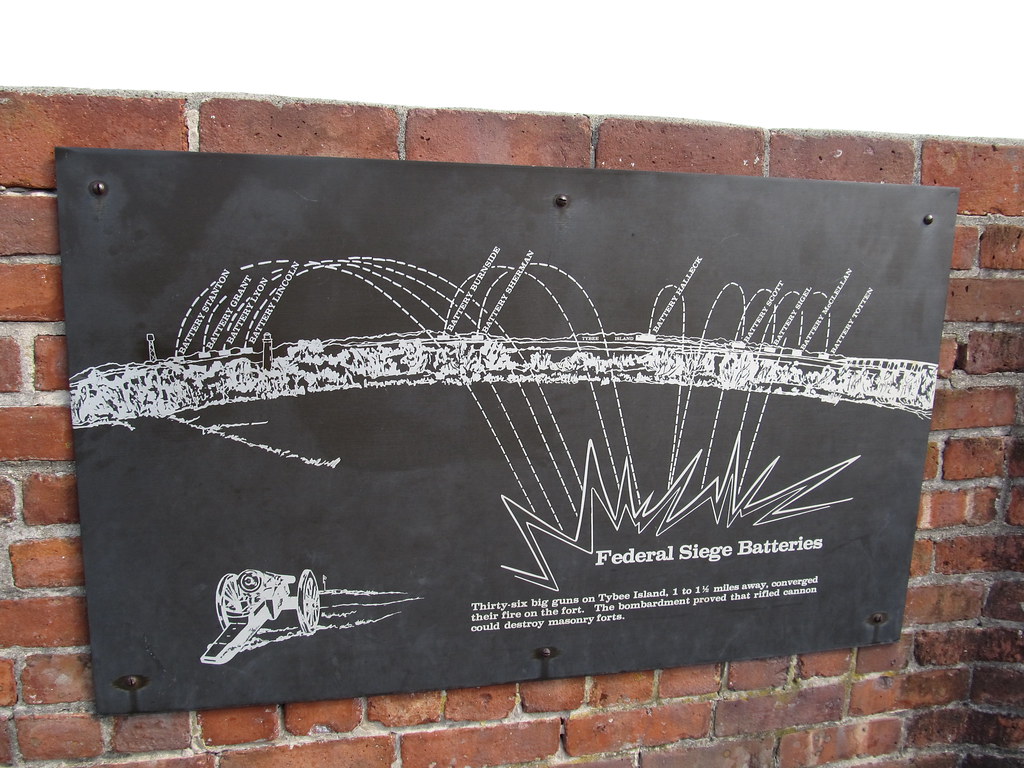
Construction on the fort began in 1829 and took eighteen years to complete. A young Army engineer named Robert E. Lee worked here early in his career. The walls stand seven feet thick and rise nearly twenty-six feet. Military experts of the era considered masonry forts like this essentially impregnable. Then, in a thirty-hour bombardment in 1862, Union forces using newly developed rifled artillery proved otherwise — forever changing the nature of coastal warfare. You can still see exactly where those projectiles tore through, the bricks shattered and exposed like a cross-section of geology. It is one of the most arresting sights in Georgia.
Walking the grounds feels genuinely exploratory. You can cross the drawbridge, descend into the damp, vaulted casemates where Confederate soldiers once sheltered, and climb the exterior walls for sweeping views across the marsh toward the Savannah River. Rangers lead excellent tours throughout the day — these are the kind of guides who clearly love what they do, answering questions with real depth and enthusiasm rather than a rehearsed script.
Beyond the military history, the surrounding landscape is a quiet revelation. The nature trails threading through the monument’s 5,365 acres put you right alongside tidal waterways teeming with wildlife. Bring binoculars. Painted buntings, osprey, and alligators sunning on the banks are common sights depending on the season.
Fort Pulaski is open daily except Christmas Day, and the entrance fee through the America the Beautiful annual pass system makes it extraordinarily affordable. Go early on a weekday morning if you can — the crowds are thin, the light on the brick is extraordinary, and you will have the moat and the marsh nearly to yourself. It is the kind of place that rewards a slow, unhurried visit, and it is absolutely worth building your Savannah itinerary around rather than treating as an afterthought on the road to Tybee.